

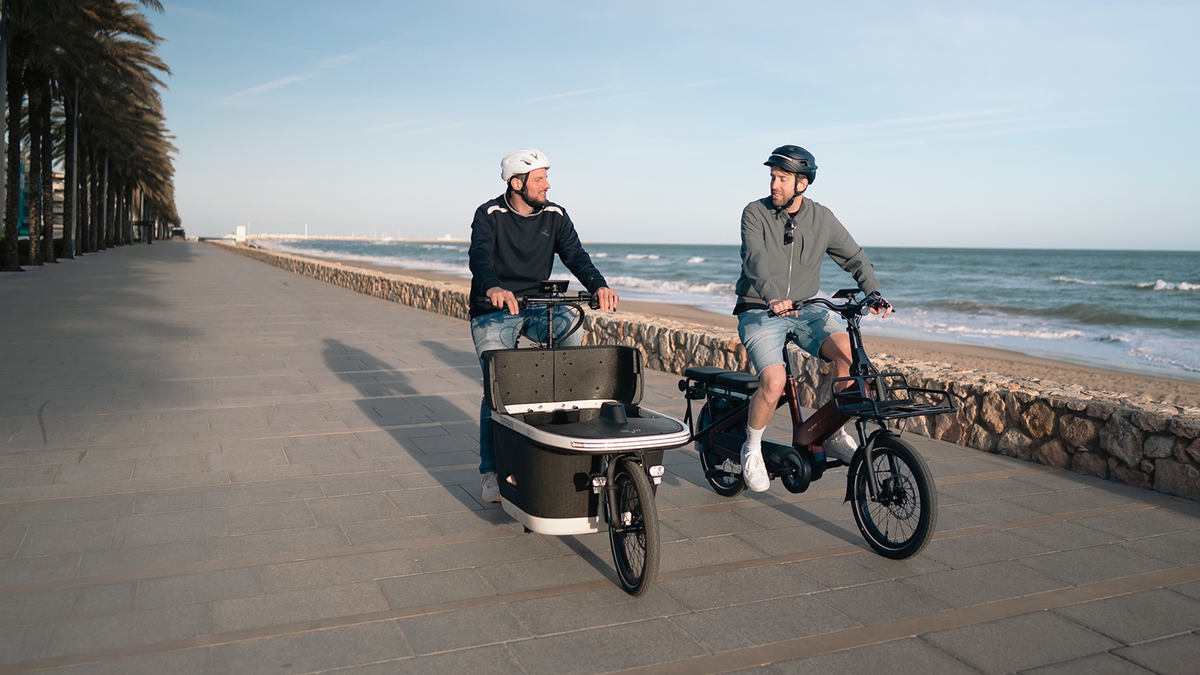
Urban mobility is changing rapidly as families look for more sustainable ways to get around. Heavy traffic and limited parking create significant stress for parents. The front-loader cargo bike offers a compelling solution for anyone looking to replace a car. This design dominates the European market.
What Are the Key Benefits of a Front-Loader Cargo Bike?
A front-loader cargo bike places the storage area directly between the handlebars and the front wheel. This special layout allows parents to maintain visual contact with their children at all times. Unlike a longtail, where children sit behind the rider, the front-loading position makes conversation easy and allows immediate observation of passengers’ needs. Many parents find that seeing their child’s face strengthens the emotional bond during the morning school run.
The physical design of the front-loader cargo bike creates a low center of gravity. Most of the weight sits close to the ground, resulting in stable handling even with heavy groceries or multiple passengers. Steering a front-loader may feel unfamiliar at first and is often compared to guiding a long canoe, but electric assistance helps the rider gain confidence quickly. The weight distribution prevents the wobbly feeling often associated with carrying children on a high rear rack.
Interaction and Emotional Connection
Social interaction is a major reason families choose a front-loader. Children sitting in a front box enjoy an unobstructed view of their surroundings. This perspective turns a simple trip to the supermarket into a shared adventure. The rider can point out birds, landmarks, or traffic signals, turning the ride into a learning experience. The feeling of a “shared cockpit” creates a sense of togetherness that neither a car nor a rear-mounted child seat can offer.
| Feature | Front-Loader Cargo Bike | Rear-Loaded Longtail |
| View of Children | Direct and continuous | Indirectly behind the rider |
| Interaction | High and easy to communicate | Limited and requires turning around |
| Center of Gravity | Very low and stable | Higher and may feel rear-heavy |
| Passenger Comfort | Enclosed box with strong protection | Exposed to wind and rain |
Is an Electric Cargo Bike Safer for Children Than a Standard Bicycle?
Safety remains the highest priority for every family cargo bike. Modern designs use advanced engineering to protect young passengers from road hazards and weather conditions. The enclosed box of a front-loader acts like a protective shield. High sidewalls prevent arms or legs from reaching the wheels, while integrated harness systems keep children securely in place during sudden braking.
European safety standards such as DIN 79010 and EN 17860 confirm that these vehicles meet strict requirements for load capacity and braking performance. Testing includes 100,000 load cycles to verify frame strength under extreme conditions. A safe electric cargo bike must have hydraulic disc brakes to reliably control the increased mass of the vehicle and passengers. These brakes provide consistent stopping power regardless of weather conditions or total weight.
Structural Safety Features
Structural integrity forms the foundation of passenger protection. Manufacturers use reinforced aluminum or steel to create a rigid frame that will not crack under heavy loads. The cargo box itself is often made from expanded polypropylene, or EPP. This material offers impact-absorbing properties while remaining lightweight and recyclable. Many premium boxes also include roll bars or reinforced upper edges to provide additional protection in the rare event of a tip-over.
| Safety Component | Function | Importance |
| 5-Point Harness | Secures the child during impacts | High |
| Hydraulic Disc Brakes | Provide consistent braking power | Critical |
| EPP Cargo Box | Absorbs kinetic energy | High |
| Integrated Lighting | Improves visibility at night | Essential |
How Can a Front-Loader Cargo Bike Replace a Family Car?
Many families in Germany and the Netherlands use a cargo bike to give up a second car. An electric cargo bike can carry up to 250 kilograms, including the rider, children, and luggage. This capacity makes it possible to complete large grocery runs or take several children to sports practice in a single trip.
The interior volume of a front-loading box typically ranges from 240 to 300 liters. This storage space is comparable to the trunk of a compact city car. Switching to an e-bike also eliminates the high costs of fuel, insurance, and parking fees. In dense urban areas, the ability to park directly in front of the destination for free saves considerable time and money every month.
Economic Comparison of Transport Options
The operating costs of an e-bike are far lower than those of a gasoline-powered vehicle. Charging a battery for a 100-kilometer ride costs only a fraction of the price of one liter of fuel. Annual cargo bike maintenance is also about 40% cheaper than maintaining a van or car. Over a five-year period, total savings can exceed tens of thousands of euros.
| Cost Category | Standard Family Car | Electric Cargo Bike |
| Annual Fuel/Energy Costs | €1,500 - €2,500 | €30 - €60 |
| Insurance | €600 - €1,200 | €0 - €100 |
| Parking Fees | High in urban areas | Free/minimal |
| Maintenance | €500 - €1,000 | €150 - €300 |
Why Do European Parents Prefer Box Bikes for Daily Trips?
The cultural shift in Europe favors active mobility over car dominance. In Germany, cargo bike sales recently reached 210,000 units, driven largely by families. The ability to bypass traffic jams via bike lanes makes the school run faster and less stressful. Parents feel more connected to their neighborhoods when they move at a human pace.
Government subsidies also support this development. Cities such as Stuttgart and Vienna offer incentives of up to €1,000 for families buying an e-bike. These subsidies make the high upfront cost of a quality family cargo bike much more manageable for middle-class households. Commercial programs offer even higher grants for small business owners who use the bikes for local deliveries.
Urban Infrastructure and Logistics
Urban planning increasingly prioritizes bicycles over private cars. Cities such as Amsterdam and Copenhagen have developed extensive networks of wide bike lanes that accommodate the larger footprint of a front-loader cargo bike. This infrastructure enables safe riding even during rush hour, as the bike remains separated from heavy traffic. High-quality bicycle parking facilities at schools and train stations further support the daily use of these versatile vehicles.
Which Technical Features Define the Best Electric Cargo Bike?
The performance of an e-bike depends on the quality of its motor and battery. A mid-drive motor is considered the gold standard for cargo applications because it delivers high torque for hills and heavy loads. Torque should ideally exceed 85 Nm to enable effortless starts from a standstill. Advanced steering systems, such as dual-cable steering, allow for a tighter turning radius and better maneuverability in narrow urban spaces. Unlike linkage steering, cables provide a direct and responsive steering feel.

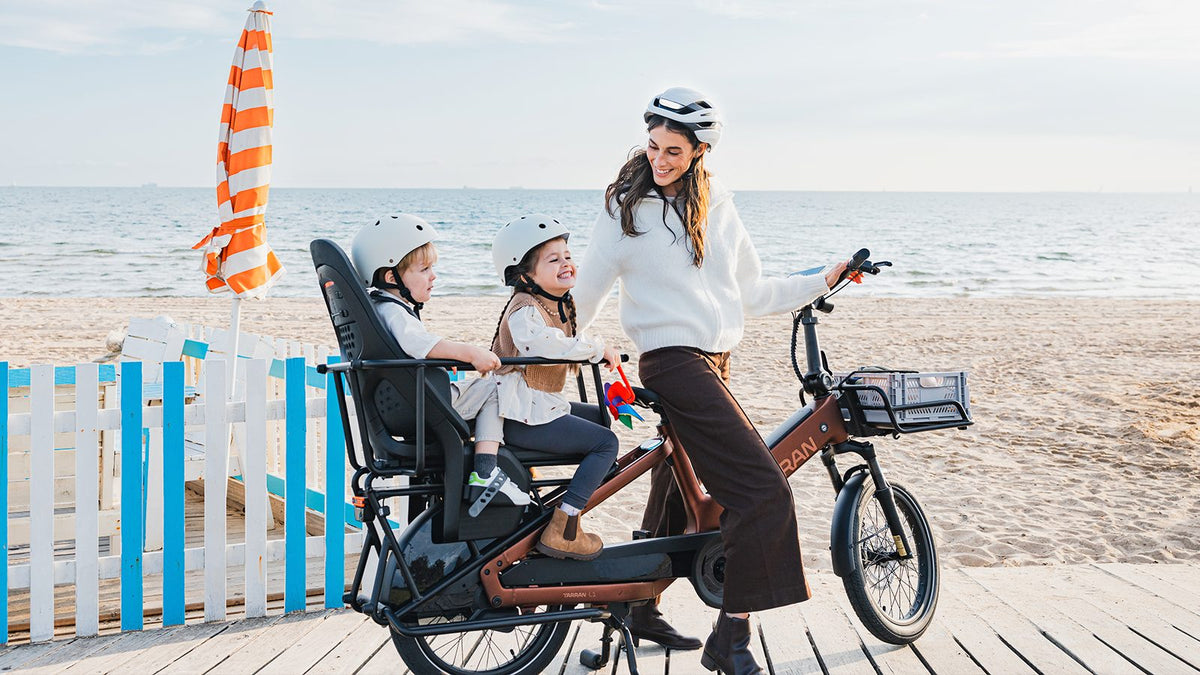
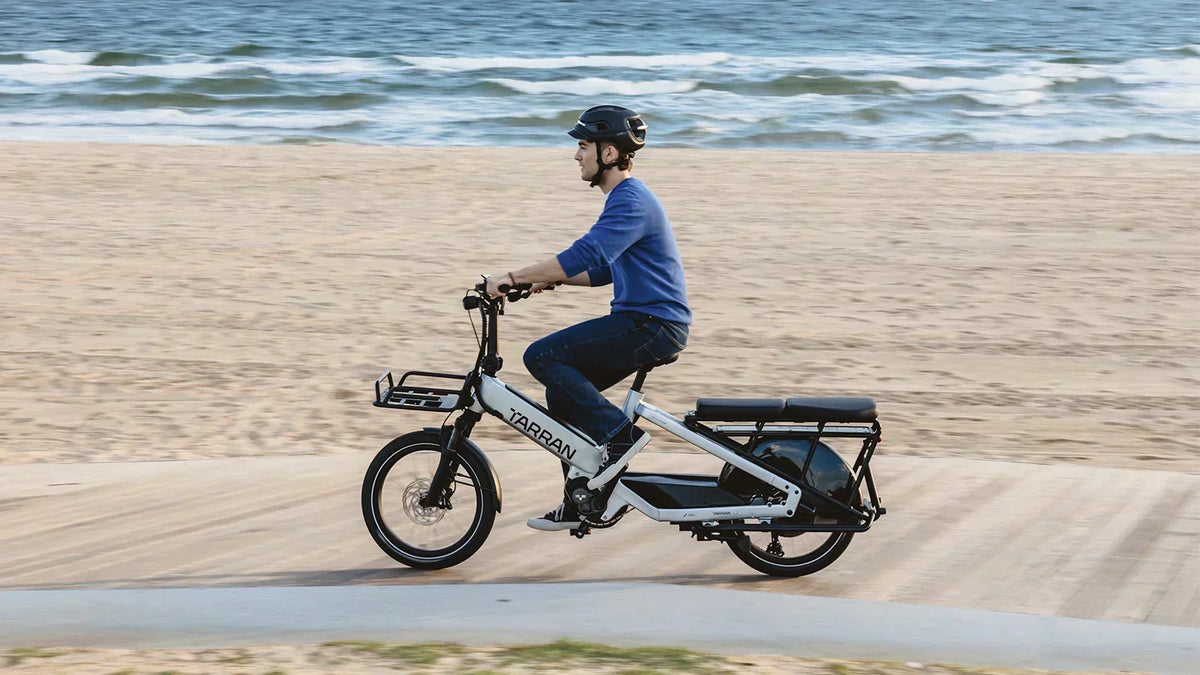
The TARRAN T1 Pro is an excellent example of innovation. This e-bike integrates the Dynamic Dualdrive™ chassis system to support balance at low speeds. A custom mid-drive motor with 100 Nm delivers the power needed for heavy loads, while dual batteries enable a range of 200 kilometers. The 5.2-inch retina touchscreen and rear radar system help maintain awareness on the road at all times. These features ensure a safe ride for the whole family while also simplifying the handling of a larger vehicle.
| Specification | TARRAN T1 Pro | Industry Average |
| Motor Torque | 100 Nm | 65 - 85 Nm |
| Maximum Range | 200 km dual battery | 50 - 80 km |
| Chassis/Support | Automatic/dynamic | Manual kickstand |
| Steering | Dual-cable | Linkage or single cable |
Can You Ride a Front-Loader Cargo Bike in Rain or Snow?
Weather resistance is a hallmark of the family cargo bike. Dedicated rain covers protect children from wind and precipitation, creating a cozy interior even in winter. High-quality covers use waterproof materials and transparent windows, allowing children to keep watching the world around them. Parents often report that their children prefer the cargo bike “tent” to sitting in the back of a cold car.
Winter riding requires a few specific maintenance routines. Cold weather temporarily reduces battery capacity, so storing the battery indoors is a smart habit. Road salt can also cause corrosion, making it necessary to rinse the frame with clean water after riding in snow to preserve the bike’s lifespan. Wider tires with deeper tread can also improve grip on slippery or muddy surfaces.
Winter Performance and Battery Care
Low temperatures slow the chemical reactions inside lithium-ion batteries. Range can drop by up to 40% when temperatures fall below freezing. Using a battery cover or simply keeping the battery inside a warm home until departure helps maintain performance. Proper lubrication of the chain and cables remains essential to prevent freezing and rust during the damp winter months.
| Maintenance Task | Frequency | Purpose |
| Rinse Off Salt | After every ride in winter | Prevent rust and corrosion |
| Check Tire Pressure | Weekly | Improve grip and efficiency |
| Lubricate Chain | Monthly | Maintain smooth pedaling |
| Warm the Battery | Daily in winter | Maximize range and performance |
How Does Carrying Passengers Affect the Handling of a Cargo Bike?
A front-loader cargo bike behaves differently depending on the weight inside the box. A loaded bike often feels more stable than an empty one because the weight presses the front wheel more firmly onto the road. This low center of gravity prevents the wobbly feeling often associated with carrying children on a high rear rack. New riders should practice with a moderate load in a quiet area to understand the different steering dynamics before entering busy traffic.
Riders must account for the vehicle’s greater length. Turning requires a wider arc, and braking needs to begin earlier because of the added momentum. Looking ahead instead of down at the front wheel is the most important skill for new cargo bike owners. Once mastered, the long wheelbase delivers a smooth, almost “Cadillac-like” ride that glides effortlessly over bumps and potholes.
What Long-Term Financial Savings Come with Owning an E-Bike?
The initial purchase price of a premium cargo bike often ranges from €4,000 to €8,000. Although this may seem high at first, the total cost of ownership over five years is far lower than that of a car. Savings on insurance, registration, and depreciation alone can pay for the bike within two or three years. Families often find themselves riding more often than expected, creating even greater savings on public transport and fuel.
The resale value of top brands remains strong. Since demand for used electric cargo bikes is high in cities such as Berlin and Amsterdam, a well-maintained vehicle can be sold for a significant portion of its original price. This strong residual value makes the initial investment much safer compared with a car, which loses value the moment it leaves the dealership.
| Vehicle Type | Purchase Price | Depreciation in 5 Years | Total Cost in 5 Years |
| Compact Car | €25,000 | €12,500 | €35,000+ |
| Premium E-Bike | €6,000 | €2,400 | €8,000 |
| Potential Savings | - | - | €27,000 |
How Do Cargo Bikes Improve Child Development and Social Interaction?
Riding in a cargo bike has positive psychological effects on children. They feel more connected to their community when they wave to neighbors and see local shops. The resulting “spatial training” helps them understand how to navigate their city without relying on a car. This early experience with the bicycle as a form of transport shapes their future habits and encourages a more active lifestyle.
Active mobility improves children’s concentration at school. Fresh air and stimulation during the ride help activate the brain, leading to better attention spans. In addition, the sense of adventure encouraged by the family cargo bike builds confidence and enjoyment of outdoor activities. Children become active participants in the journey instead of passive observers in the back seat of a van.
Children who grow up riding in cargo bikes are more likely to choose bicycles as their primary form of transport as adults. They learn traffic rules by observing how their parents use intersections and bike lanes. This early exposure helps normalize the bicycle as a practical utility vehicle, not just a leisure device. It helps create a generation of citizens who see cycling as a fast, clean, and modern way to move through the city.
What Is the Environmental Impact of the Cargo Bike Revolution?
Switching from combustion engines to electric motors significantly reduces carbon emissions in urban areas. A single cargo bike replacing a car can save more than 95% of carbon emissions over its lifetime. In Germany, wider cargo bike adoption could reduce local transport emissions by up to 34% by 2035. This contribution is essential for meeting climate goals and creating healthier urban environments.
Beyond carbon output, cargo bikes also reduce noise pollution and physical congestion. They require far less space on the road and for parking, allowing cities to repurpose land for parks and pedestrian zones. Replacing a heavy SUV with a lightweight electric cargo bike reduces wear on road surfaces and lowers maintenance costs for the entire municipality.
Sustainability and Material Choices
Many manufacturers now prioritize sustainable materials in their production processes. Using recyclable aluminum and EPP for cargo boxes reduces the vehicle’s environmental footprint. Choosing a bike built for ten years of use also prevents waste associated with low-quality disposable products. Supporting brands that offer long-term repairability and spare parts availability is an important step toward a truly circular economy in transportation.
| Impact Category | Motorized Van/Car | Electric Cargo Bike |
| Carbon Emissions | High | Extremely low |
| Noise Level | 70–80 dB | Nearly silent |
| Road Space Requirement | Large footprint | Small footprint |
| Recyclability | Complex/low | High with aluminum/EPP |
Final Thoughts on the Ultimate Family Vehicle
The front-loader cargo bike represents a major shift in how families experience daily life. By prioritizing safety and visibility, this design ensures a high-quality riding experience for children. Choosing an electric cargo bike allows parents to save money while protecting the environment. As urban infrastructure continues to expand, the cargo bike will remain the most practical and enjoyable way to transport a growing family.

Leave a comment
This site is protected by hCaptcha and the hCaptcha Privacy Policy and Terms of Service apply.