

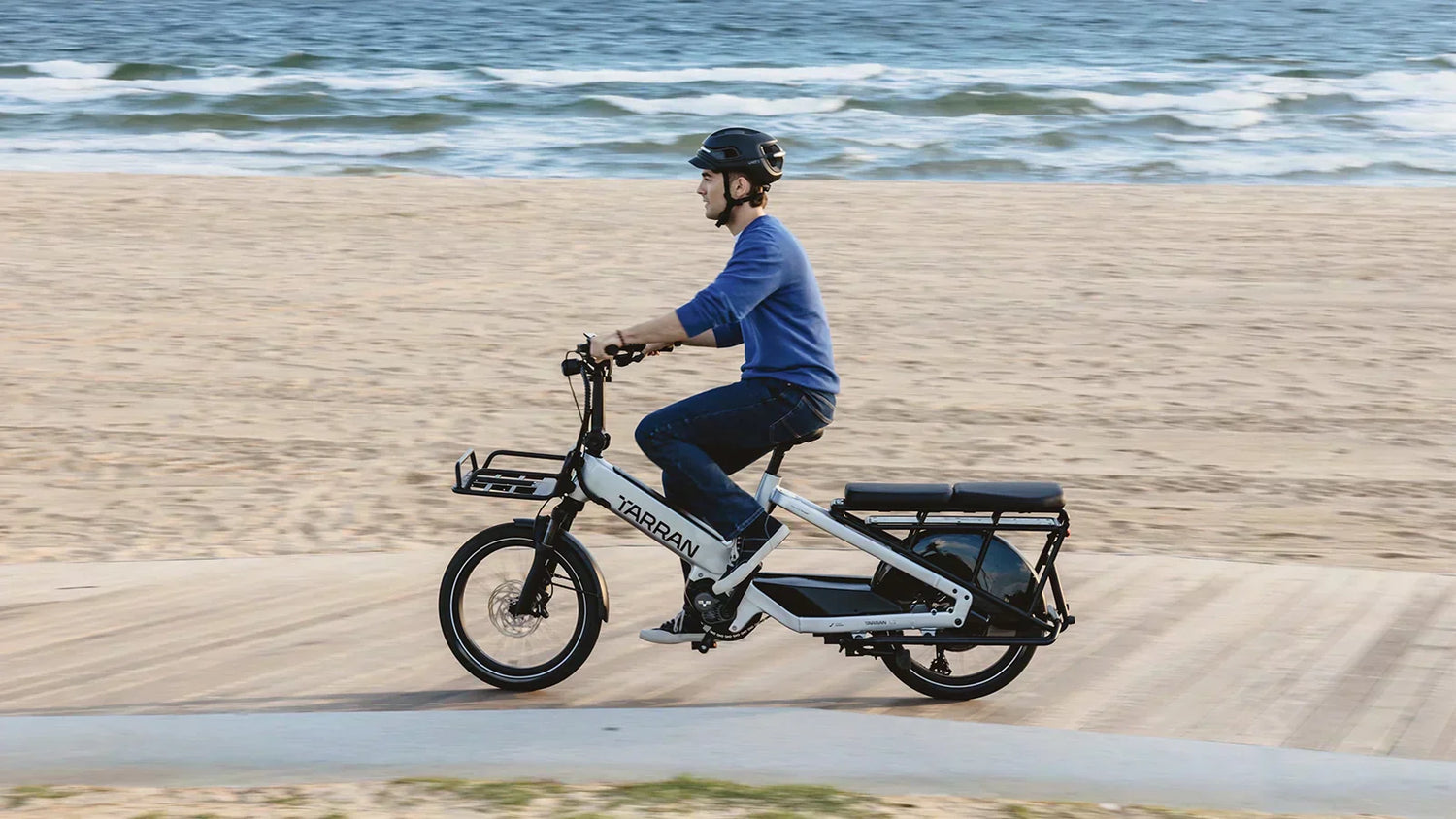
Urban transport in German cities is changing rapidly. Families and businesses today are looking for smart alternatives to the car. Cargo bikes offer an environmentally friendly way to transport groceries, goods, children, and family members. The decision between two or three wheels has a major impact on your daily riding experience. Your choice affects speed, comfort, and safety on busy city streets.
How Two- and Three-Wheeled Cargo Bikes Differ
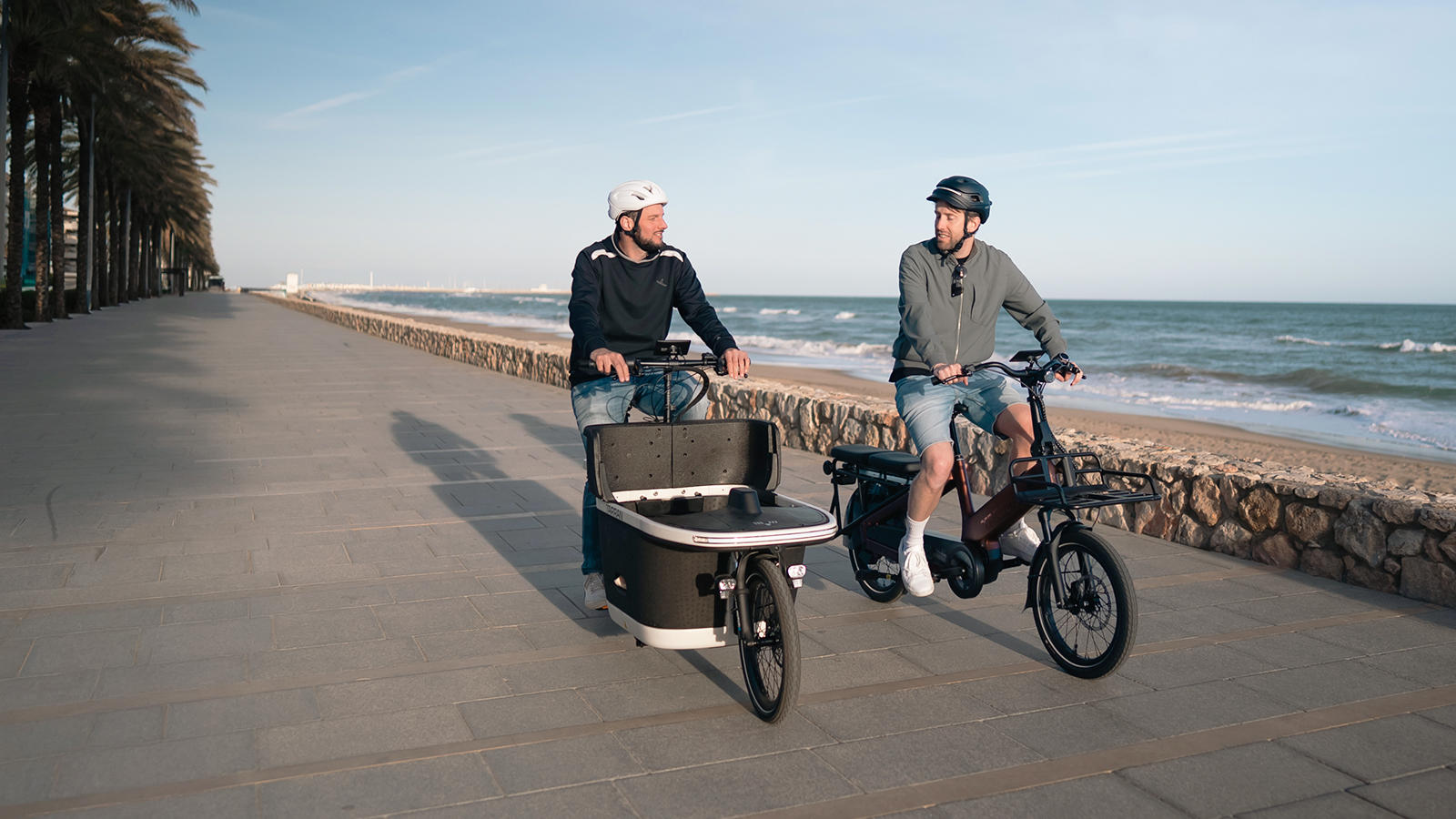
The design choice between a two-wheeled and a three-wheeled cargo bike leads to fundamental differences in balance, handling, and comfort. At the heart of the comparison is the difference between active and passive stability. Two-wheeled models, often referred to as “Long Johns,” function much like regular bicycles. They stay upright while riding, but when stationary they need to be balanced by the rider or supported by a stand. Most riders get used to two-wheelers after a short time. Thanks to the narrow frame, the bike feels agile. At higher speeds, it behaves predictably.
Three-wheeled models, on the other hand, have a wider support base. This geometric design provides stability when stationary. At a red light, the rider can remain seated without having to put a foot on the ground. This stability eliminates the need to support a heavy load using leg strength alone. Three-wheelers often use turntable steering or Ackermann steering. With turntable steering, the entire box and the front wheels turn together. This system offers a large cargo volume, but requires more effort when steering. With Ackermann steering, only the wheels turn, while the cargo box stays aligned with the frame. This design makes tight maneuvers more precise and easier to control.
Handling and Riding Feel
The behavior of these vehicles while riding shows clear differences. A two-wheeled cargo bike allows the rider to lean into the curve. This lean feels natural to experienced cyclists because it resembles the handling of a regular bicycle. This agility enables higher speeds in corners. Thanks to its narrow profile, the bike moves easily through narrow German streets and weaves through traffic with little effort. Dual-cable steering systems on modern two-wheelers allow for a very large steering angle. This helps when navigating tight turns on narrow paths.
Three-wheelers remain rigid unless they are equipped with special tilting technology. Cornering with a conventional trike means turning the handlebars without the bike leaning into the curve. At high speeds in tight corners, the weight of a rigid three-wheeler shifts outward. If the speed is too high, the inner wheel can lift off the ground. Riders must slow down significantly before corners in order to remain stable. This mechanical characteristic makes trikes feel more like small utility vehicles than classic bicycles.
Stability and Loading Comfort
Stationary stability is the greatest strength of the three-wheeled platform. When loading cargo or children, the trike acts like a stable platform that does not wobble. Parents appreciate that children can climb in and out of the front box independently. This comfort is lacking in two-wheelers. Single-track bikes require the rider to stabilize the frame while passengers get in and out. If this does not happen, there is a risk that the entire vehicle will tip over. The boxes of many modern trikes are made of expanded polypropylene, or EPP. This material is recyclable, shock-absorbing, and very light.
However, ride comfort also depends on how many wheels are exposed to bumps and uneven surfaces. A two-wheeler is a single-track vehicle. It needs only one narrow, smooth riding line. A three-wheeler, by contrast, has three wheels following separate paths. If there is a pothole or manhole cover anywhere within the vehicle’s width, one of the wheels is likely to hit it. On uneven German cobblestones, this leads to a bumpier ride. In addition, the upright seating position on trikes transfers vibrations more directly to the spine. The more bicycle-like riding position on a two-wheeler allows the arms and legs to absorb more shocks.
Weight and Cargo Space

The payload capacity is generally higher in three-wheeled models. The wider, rectangular boxes of trikes often offer space for up to four children or a large weekly grocery load. Such boxes can carry more than 100 kilograms. Two-wheelers are typically slimmer. These models usually transport two children and a payload of around 80 kilograms in the front box.
| Feature | Two-Wheeled Cargo Bike | Three-Wheeled Cargo Bike |
| Standard box payload | 60 to 80 kg | over 100 kg |
| Child capacity | 1 to 2 children | 2 to 4 children |
| Vehicle width | approx. 65 cm | approx. 85 to 90 cm |
| Vehicle weight | approx. 60 kg | approx. 65 to 75 kg |
How to Choose Between Two- and Three-Wheeled Cargo Bikes
When choosing the right bike, you should consider your daily environment and your personal needs. There is no single model that is ideal for every household in Germany.
Distance and Commuting Route
The length of the daily route is a decisive factor. Usage patterns suggest a clear threshold. For distances under 3 kilometers, the stability of a three-wheeler is especially valued. Short trips to daycare or quick supermarket runs feel relaxed on a trike. However, if the daily route exceeds 15 kilometers, the efficiency of two wheels has the advantage. Two-wheelers maintain higher average speeds. Such bikes require less energy to move through the city. One test showed that a two-wheeler completed a short route in 6 minutes, while a three-wheeler took more than 7 minutes. Over longer distances, this difference becomes even more significant.
Infrastructure and Urban Space
Urban density plays an enormous role in the decision. In historic German city centers with narrow streets and tight alleys, the slim profile of a two-wheeler is ideal. A two-wheeler is usually no wider than its handlebars. This means it can pass anywhere a normal bicycle can ride. Many older German urban districts have cycle paths that were built in the 1980s. These paths are often narrow and damaged by tree roots. Two-wheelers cope with such uneven surfaces much more comfortably.
Three-wheelers are more likely to reach their limits on narrow cycle paths. If a path is less than one meter wide, a trike takes up practically the entire space. This makes it harder for other cyclists to overtake. For riders in areas with wide “bicycle highways,” such as the RS1 in the Ruhr region, the width of a trike is not a problem. Germany plans to further expand such wide cycle expressways in cities such as Munich and Berlin. Such infrastructure favors the stability and cargo volume of the three-wheeled concept.
Maintenance and Robustness
The amount of maintenance differs depending on the number of wheels and the complexity of the steering system. A three-wheeler has more moving parts. These include an additional wheel, additional brakes, and complex steering linkages. Such factors can lead to higher service costs in the long term. Two-wheelers are more simply built. Most local workshops in Germany can handle the standard components of two-wheeled models without difficulty.
Cyclists in Germany must also face the challenges of winter. Road salt and slush can corrode and damage components. A belt drive instead of a chain reduces the need for constant cleaning and oiling. High-quality hydraulic disc brakes are essential for both types. Such brakes reliably handle the weight of a full load even in wet weather. Maintenance schedules in Germany often recommend an initial service after 200 kilometers. Regular checks every 1000 kilometers help keep the motor and brakes in top condition.
Economic Factors and Leasing
The German market benefits from company leasing programs such as JobRad. Through salary conversion, employees can lease an e-cargo bike with significant tax advantages. This financing model helps make cargo bikes more accessible. Despite the higher purchase price, resale values remain strong. A well-maintained cargo bike loses only about 250 euros in value during the first year. This makes the purchase a sensible long-term investment compared with a small car.
The Best of Both Worlds: The Development of the Modern E-Cargo Bike
Modern e-cargo bikes such as the TARRAN T1 Pro aim to bridge the gap between the speed of a two-wheeler and the balance of a three-wheeler through advanced technology. One outstanding feature is the Dynamic Dualdrive Landing Gear System. These motorized wheels automatically deploy when stopping and immediately provide stability without the need to manually balance a heavy load. With the Road Detection System, safety reaches a new level. Three 1080P cameras and a rear-facing millimeter-wave radar continuously monitor the surroundings. Vibrations on the handlebars warn when cars approach from behind and act like a virtual co-pilot. The central 5.2-inch high-resolution touchscreen runs TarranOS and provides navigation as well as camera images in real time. Strong performance is provided by a 100-Nm mid-drive motor, which effortlessly handles a total weight of up to 220 kg. Two batteries extend the range to 200 kilometers, while the Gates Carbon Drive and Enviolo hub gearing ensure a smooth, quiet ride with low maintenance requirements. Modern comfort features such as wireless smartphone charging and integrated Bluetooth speakers make every ride more pleasant. Sentry Mode even monitors suspicious movements when the bike is parked.
Conclusion
Finding the right cargo bike means aligning your own daily requirements with the appropriate number of wheels. Two wheels are suitable for long, fast rides through narrow paths. Three wheels offer space and stability for heavy loads. New technologies today provide stable solutions for every type of rider. The ideal bike makes everyday urban tasks easier and more enjoyable. Test different models on routes in your area to find the perfect choice. Sustainable mobility begins with the right equipment.

Leave a comment
This site is protected by hCaptcha and the hCaptcha Privacy Policy and Terms of Service apply.