

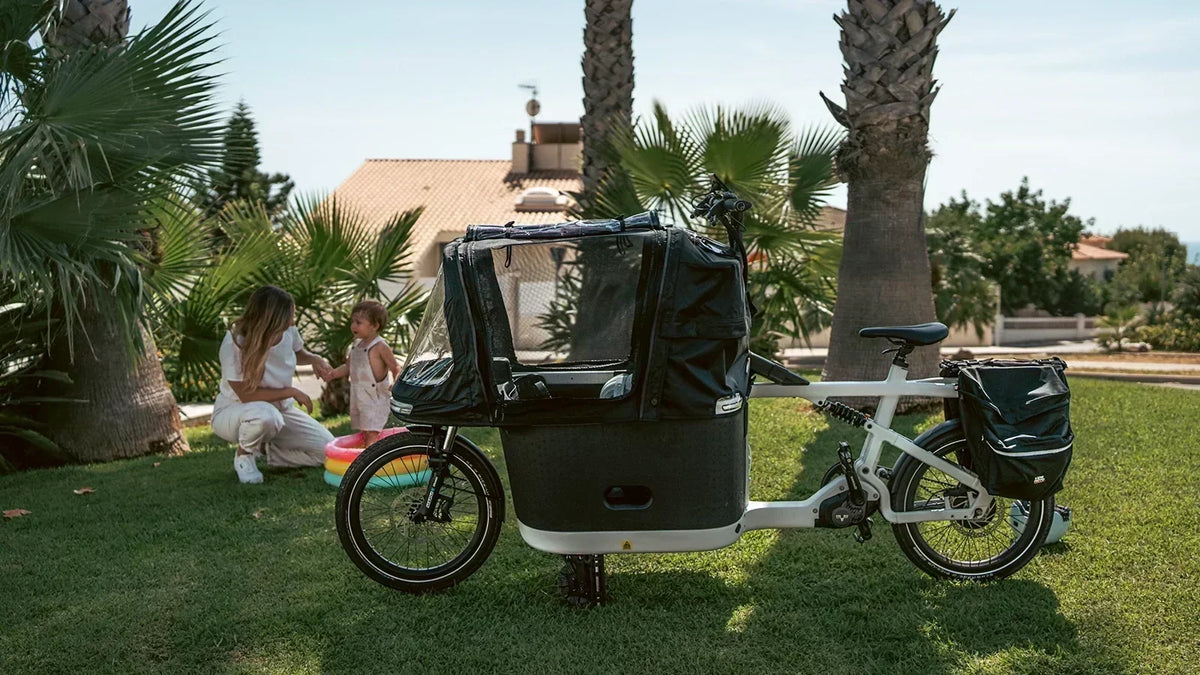
Many electric cargo bikes are designed for riding in the rain. How much moisture a specific model can tolerate depends, however, on the manufacturer’s specifications, the condition of the seals and the correctly closed covers. Rain-resistant does not mean waterproof, nor does it mean approval for flooded roads, pressure washers or permanent unprotected outdoor storage.
What matters then is whether the battery, display, charging port and plug connections are undamaged and correctly closed. After the ride, the bike needs a dry, well-ventilated place. A bicycle with weather protection also protects children or cargo, but it does not replace care for the electrical and mechanical components.
Before riding, it is therefore worth checking the model manual: it lists the permitted weather conditions, the meaning of the stated IP protection rating and the correct handling of the battery. In deep water, with visible damage or in the event of error messages, it is better to end the ride early.
Which components need to be protected against water?
Electrical contacts and all openings through which water could enter the system are particularly sensitive. These include the charging port, battery contacts, display connections, controls, cable transitions and plug connections. Their covers must be fully closed during the ride.
The motor and permanently installed electronics on an e-bike designed for rain are protected by design. However, this protection becomes less effective if seals are damaged, plug connections are loose or cover caps are open. After a fall or a repair, the affected area therefore deserves more attention than a frame that is merely wet on the outside.
Mechanical parts also react to moisture. Brake surfaces, chain, sprockets, bearings and screw connections are additionally exposed to water, sand and fine dirt on wet roads. With a belt drive, chain maintenance is no longer necessary, but the other components still need the checks specified in the manual.
For families, the transport area is also relevant. Belts, seat cushions and bags must not remain folded together while damp after the ride. On a bicycle with a roof, a suitable rain cover primarily protects children and cargo; depending on the design, spray water can still reach the wheels, drivetrain and underside.

What do IP protection ratings really mean?
An IP protection rating describes a standardised test of the enclosure against the ingress of foreign objects and water. It is a specific technical indication, but not a blanket guarantee for every amount of rain, every exposure time or the condition of a bicycle that has been used for years.
The IP system is based on IEC 60529 and its German implementation, DIN EN 60529. The VDE documents on IP protection ratings assign IPX5 and IPX6 to tests against water jets. The “X” means that no digit is specified at that position for protection against solid foreign objects.
|
Rating |
What it describes |
What does not follow from it |
|---|---|---|
|
IPX4 |
Protection against splashing water in a defined test setup |
No approval for immersion |
|
IPX5/IPX6 |
Protection against water jets under specified test conditions |
No permission to use a pressure washer |
|
IPX7 |
Temporary immersion under specified conditions |
No general statement on permanent immersion |
|
X |
No digit specified at this position |
Not automatically “dustproof” or “unprotected” |
Can the battery stay on the bike in the rain?
Yes, if the manufacturer permits riding in the rain, the battery is correctly inserted and the housing, seals and connections are undamaged. A battery intended to remain on the bike during riding does not need to be removed as a precaution during a normal rain shower.
The ADAC guide to pedelec batteries states that riding in rain or snow does not affect the battery. For specific handling, however, the manual for the respective system remains decisive. A damaged housing, loose fit or open charging port changes the situation.
While on the road, it is usually better to leave the correctly locked battery on the bike rather than remove it in the rain and expose the contacts. If water is unusually high on the road, the safe route is not through it. Permission to ride in the rain is not approval to cross flooded sections.
Charging should only take place in a dry location. The charging port, plug and battery surface must be dry; the charger also does not belong in a damp garage corner or under a makeshift canopy. If there is moisture in the connection, discolouration, smell or an error message, the system should remain switched off until it has been checked by a specialist.
What should you do after a wet ride?
After a wet ride, the electric cargo bike needs time to drip off and dry. A covered, well-ventilated parking place is more suitable for this than a tightly closed cover under which moisture remains on the bike. The following order then helps:
- Carefully remove coarse dirt with a soft cloth or a soft brush.
- Wipe the frame, display and the closed charging port dry from the outside.
- Open the transport box, belts, seat cushions and bags and let them dry completely.
- After drying, check the maintenance points listed in the manual and, if necessary, treat the chain with a suitable care product.
- Before the next ride, briefly check that the lights, brakes, display and drive system are functioning.
A pressure washer does not shorten this work. It should be avoided because water can penetrate sensitive components such as the drive unit. The same caution applies to a hard water jet aimed directly at bearings, seals, display or plug connections.
Radiators, hot air and hairdryers are not good shortcuts either. Room temperature and air circulation dry materials and electronics more gently. If the display remains fogged up, the system reacts unusually or contacts are visibly wet, the next ride should only begin after clarification with the manufacturer or a specialist workshop.
When does a full bicycle cover help?
A full cover helps especially when the bike is parked and no enclosed bicycle room is available. It keeps direct rain, dust and sun away from the bicycle, but it replaces neither a dry parking place nor drying after a ride.
The cover should only be placed over a bike that is as dry as possible; after longer rides, the bike should also be allowed to cool down so that heat and moisture do not build up under the cover. Otherwise, trapped moisture can remain longer on metal parts, cushions and plug areas under a tight-fitting cover. Openings or a suitable fit support air circulation; in windy conditions, the cover must sit in such a way that it does not rub or fly away.
An e-bike with weather protection can solve two different tasks. A full bicycle cover protects the parked bike. A bicycle with a roof or rain cover primarily protects children and cargo while riding. A roof over the box does not provide additional protection for the motor, battery or connections below the frame.
For the T1 Pro, TARRAN offers an all-weather bicycle cover, which according to the current product page is intended for longer standing times as well as protection against dust, rain and sun, and is compatible with this model. For rides with children, there is a separate quick-release rain cover. Both products fulfil different purposes and should be used according to their respective instructions.
Add the right weather protection now
The suitable weather protection depends on the actual problem. For riding with children, a model-specific rain cover helps; for longer outdoor parking, a full cover is useful. Electrical connections, battery and display must remain closed, undamaged and dry enough for charging regardless.
- Check the model manual and the stated IP protection rating
- Do not confuse a rain cover with a full-bike cover
- After wet rides, dry first, then cover or charge
- In the event of damage, water in the connection or error messages, contact a specialist workshop
Which cover and which rain cover fit your TARRAN model is shown in the model-specific TARRAN manuals. This turns a bicycle with weather protection into an everyday-ready solution without overestimating the limits of the electronics or accessories.
Electric Cargo Bike Rain Protection Questions
Can you ride an electric cargo bike in heavy rain?
Only if the manufacturer allows riding in the rain, the bike is undamaged and visibility, braking distance and road conditions remain safe. In heavy rainfall, on flooded roads, with poor visibility or in the event of error messages, you should stop in a safe place.
Does IPX6 mean the bicycle is waterproof?
No. IPX6 describes protection against strong water jets under specified test conditions. This does not imply approval for immersion or for using a pressure washer.
Can the battery be charged directly after a ride in the rain?
No, not as long as the battery, charging port or plug is damp. Charging should only begin in a dry place and according to the instructions in the model manual.
Does a rain cover also protect the motor and battery?
Usually not, because a cover over the transport box primarily protects children and cargo. The electrical components still rely on their own housings, seals and covers.
Can a wet cargo bike be covered immediately?
No, if the cover traps moisture and sufficient drying is not possible. The bike should first be allowed to drip off and dry in a well-ventilated place.

Leave a comment
This site is protected by hCaptcha and the hCaptcha Privacy Policy and Terms of Service apply.