

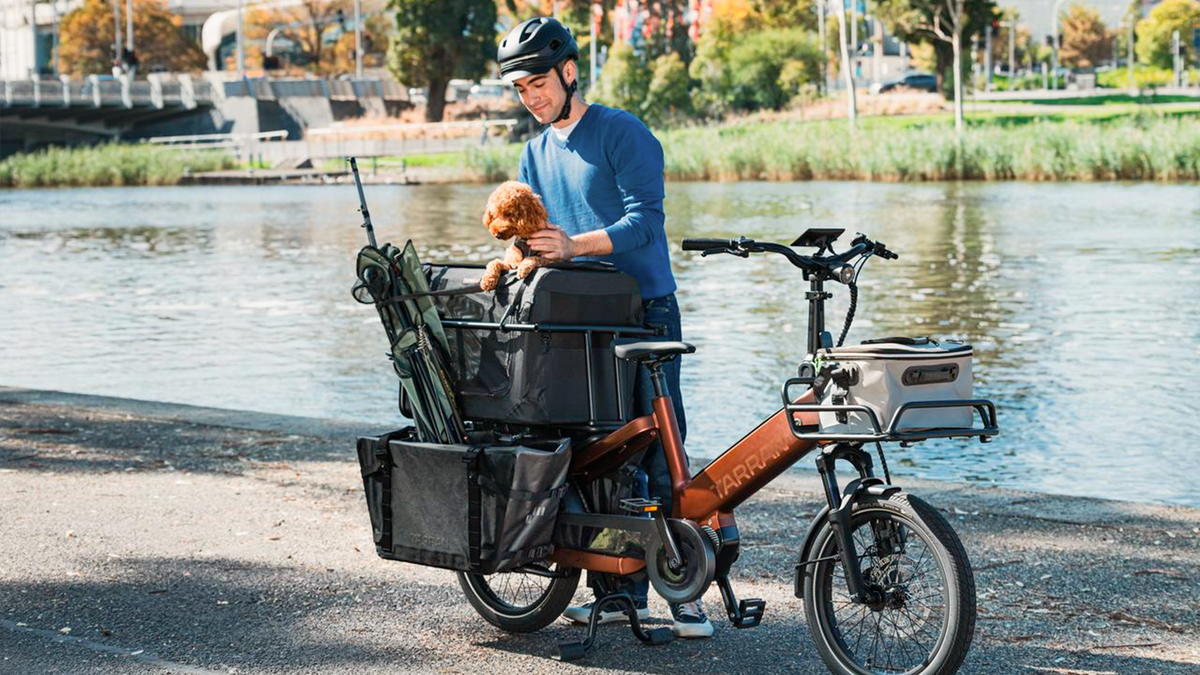
Wind on the snout, ears flapping in the breeze and your best friend right there on board: a cargo bike promises freedom for dog and owner alike. But before the adventure starts, many people face one big question: which cargo bike is really right for my dog?
The most common mistake is to look first at the bare kilogram figure on the spec sheet. In practice, though, the maximum load is only half the story. Whether a ride turns out relaxed depends not only on weight, but on the size of the transport box, your dog's temperament and how confident you feel at the handlebars. In this guide you will learn how to start from your dog's needs in order to find the perfect bike - and how to travel safely, step by step.
Start by Assessing Your Dog, the Route and the Total Weight
Suitability follows from build, need for movement, behaviour and total load. Compare your dog and the box in their fully grown state with the dimensions of the model, and also allow for shopping, accessories and luggage.
Assess Body Size and Need for Movement Realistically
A suitable transport box for a dog in a cargo bike has to offer more than just barely sufficient space. The dog should be able to adopt a natural posture, lie down and change position in a controlled way; internal dimensions and entry are particularly important for medium-sized and large dogs. Similar guidance on choosing the right size is also provided by the ADAC for dog trailers. For a cargo bike box, check how far this transfers to the specific model.
Measure and check:
- internal length, internal width and internal height of the box or load area;
- sitting, turning around and relaxed lying down for the fully grown dog;
- entry, securing space and any potential edges;
- dog, box, luggage and accessories as one combined load.
Small or compact dogs can find enough room in a suitable, firmly mounted solution. With medium-sized and large dogs, internal length, entry height, freedom of movement and the permitted total payload usually become the decisive bottleneck. A general weight limit cannot be given responsibly without specific model data.
Take Temperament and Destination into Account
A calm dog on a short, low-traffic route makes different demands than a nervous or jump-happy dog on the way to training class. Before choosing a frame type, decide whether you will be riding to the park, the vet, the shops or regularly along busier roads - and how much luggage comes along.
If your dog tends to bolt, suffers from persistent anxiety or has health limitations, a veterinary practice or a qualified behaviour specialist should be involved. A cargo bike only suits a dog if not only the box but also the overall situation remains controllable.
Cargo Bike for Dogs: Choose the Frame Type According to Space and Handling
Front loaders, longtails and three- or two-wheeled concepts differ in interior space, entry, visibility, centre of gravity, manoeuvrability and stability. A front loader can be practical thanks to its front load area and direct eye contact, but its frame type alone does not make it dog-friendly; test every option with a realistic load.
| Frame type | More likely to suit if | Check before buying |
| Front loader | a sufficiently large, easily visible load area and a controlled entry are required | Internal dimensions, mounting, centre of gravity, brakes, cornering behaviour and payload |
| Longtail | a suitable transport box or protective solution can be securely mounted on the rear section | Barriers against jumping out, getting on and off, seating position, load distribution and stability |
| Individual custom solution | dog, box or intended use place special demands on space and entry | Technical compatibility, secure mounting, maintenance, parking options and safe handling in everyday use |
Two-wheeled bikes can feel different in corners than three-wheeled concepts; the latter often need more room for parking and turning. These differences are not a blanket safety verdict. Test them with a dog box or a weight simulation and, where necessary, compare the frame types side by side.
For large dogs, a front load area may be the obvious choice if entry and interior space are right. It is not automatically safer or better, however: a high centre of gravity, awkward parking or a restless dog can all worsen the handling. Measurements, weight and a test ride are what decide.
Secure Your Dog Against Jumping Out and Sliding
When transporting a dog in a cargo bike, the harness, anchor point, movement limitation and transport environment all have to work together. The restraint should limit jumping out without unnecessarily restricting lying down or controlled changes of position; it replaces neither a stable load area nor an adapted riding style.

- Check the anchor point specified by the manufacturer and fit the box or protective system.
- Put on a properly fitting harness and check the fit, chafing points, entanglement risks and freedom of movement.
- Test the restraint at a standstill first, then get your dog slowly used to the stationary or pushed setup.
Weighing Up a Closed Box Against an Open Load Area
A closed box can restrict freedom of movement more strongly and therefore allow more control with a jump-happy dog. It does, however, need sufficient interior space, air exchange and the ability to check on the dog. An open load area often gives the dog a better view, but calls for an effective protective system and particularly careful mounting.
| Transport format | Possible advantages | Critical points to check |
| Closed box | Clear boundaries and a protected interior | Size, ventilation, entry, temperature and securing inside |
| Open load area with protective system | Better visibility and possibly easier entry | Side wall, protection against jumping out, mounting and the dog's behaviour |
With a nervous dog, neither the more open nor the more enclosed solution is inherently superior. Choose the version in which the dog stays calm and in which you can reliably manage the restraint, the visual checks and the movements of the bike.
Check the Restraint for Pressure Points
Use a properly fitting harness and the load-bearing anchor point specified by the manufacturer. Before setting off, check the fit, chafing points, entanglement risks and freedom of movement; an improvised attachment or securing the dog by the collar alone is not an adequate solution. Expert guidance on mounting and movement limitation can be found at Thieme on securing dogs in a cargo bike.
Let your dog lie down and change position, but not reach the edge of the load area or get out of the box. No particular lead length or harness guarantees that an accident will be prevented.
Make the Box and Load Area Comfortable and Controllable
Floor, barriers, entry, ventilation and weather protection must together create a sure-footed, controllable environment. No single accessory turns an unsuitable box into a suitable one.
Assess the Floor, Side Wall and Entry
A non-slip floor that stays firmly in place can improve grip when pulling away and braking. It does not replace a restraint, though, and must not create any tripping edges. Test the construction with your dog or with a realistic simulation of size and weight.
- fix the floor firmly and check for loose edges or folds;
- allow for cleaning after mud, wet weather and shed fur;
- assess side wall, entry and restraint together;
- test the entry particularly carefully with large, older or less mobile dogs.
Together with the restraint, the side wall should keep the dog in the load area, allow visual checks and not unnecessarily restrict a natural posture. There is no evidence for a universally valid minimum or maximum height; what matters are the dog's dimensions, the construction of the box and the restraint.
Adapt Ventilation and Weather Protection to the Ride
A cover should protect against rain and sun without unduly restricting air exchange or visual checks. As a starting point for specific equipment, you could look at a weather cover for the cargo box; this implies no statement about suitability for dogs or safety performance.
In warm weather or on longer rides, plan for water, breaks and direct checks on your dog. Pay attention to temperature, breathing and behaviour instead of assuming a blanket maximum ride time.
Evaluate Equipment and Payload for Your Everyday Use
What counts first is the permitted total payload, braking control, stable mounting and usable interior space. Comfort accessories come afterwards and should not worsen the centre of gravity, the entry or the handling.
| Criterion | Why it matters for the dog | How to check it |
| Payload and internal dimensions | Dog, box and luggage all have to fit the concept together | Compare the model specifications with the weighed loads and the internal dimensions |
| Brakes and control | Real weight changes pulling away, braking, cornering and parking | Test with a realistic load on a quiet, open surface |
| Mounting and cleaning | The box or protective system must not slip and has to remain practical in everyday use | Check anchor points, edges, moisture, dirt and access for maintenance |
| Weather protection and storage | Rain, sun and additional luggage affect comfort and centre of gravity | Arrange accessories so that visibility, air exchange and balance are preserved |
Weigh your dog, the box, luggage and accessories together and compare the total with the permitted payload of the specific model. With a heavy load, assess not only motor power but also brakes, centre of gravity, cornering behaviour and how easily the bike can be parked. Notes on payload on a cargo bike in general serve only as broad orientation; the manufacturer's specifications for the model in question take precedence.
Give priority to safety-relevant and essential functions first. Further suitable cargo bike accessories only make sense once interior space, mounting, payload and handling are already right.
Test First, Then Decide
Only a realistic hands-on test will show whether dog, box and cargo bike really work together. Test the handling with weights beforehand and without your dog, get your four-legged friend used to the box at a standstill and without time pressure, and make your first test ride on a quiet route. Watch body language and how the bike feels - if your dog becomes very restless, stop and readjust.
Your check before buying: Is the interior space right? Are payload and mounting adequate? Can the whole setup be braked and steered safely? Only when safety, comfort and handling are convincing in practice have you found the ideal cargo bike for your everyday life. Recommendations on gradual habituation and on stopping early when in doubt can also be found in this veterinary guide to cycling with a dog.
Cargo Bike Dog Transport Safety FAQs
Am I allowed to transport my dog in a cargo bike on public roads?
Whether this is permitted depends on the design, the intended use and the applicable regulations. Check the current road traffic regulations (StVO) and local requirements; if you are unsure, the responsible traffic authority can help.
How do I get a dog used to a cargo bike?
Start with the box at a standstill, voluntary entry and short sessions. After that, the bike can be pushed; if stress persists, take a break and seek advice.
What should I do if my dog pants heavily or becomes restless?
Stop somewhere safe and check temperature, fit, restraint and surroundings. If the panting is repeated or unusual, a veterinary practice should determine the cause.


Leave a comment
This site is protected by hCaptcha and the hCaptcha Privacy Policy and Terms of Service apply.