

How much weight a cargo bike may carry is not determined by the size of its box alone. The key figure is its permissible gross weight, which includes the bike, battery, rider, children, accessories, and cargo together.
Payload is calculated by subtracting the bike’s actual weight from its permissible gross weight. To determine the remaining cargo capacity, you must then subtract the rider, children, and any additional accessories. Also remember that the total is not the only limit: the maximum rider weight and the load limits for individual cargo areas still apply.

Which Weight Specification Matters When Buying?
When buying, compare four figures side by side: permissible gross weight, bike weight, maximum rider weight, and load limits for specific areas:
- Permissible gross weight: the maximum combined weight of the bike, people, accessories, and cargo.
- Bike weight: the weight of the ready-to-ride bicycle according to the supplier’s definition.
- Maximum rider weight: the limit for the rider.
- Area-specific limits: the permitted load for the box, rear rack, child seat, or other mounting points.
Pay close attention to how the bike weight is defined. Some product pages specify the bike without accessories, while others exclude the battery or refer to a particular basic configuration. A lock, second battery, rain canopy, child seats, and large bags all increase the bike’s actual weight. They are not carried “for free”; they reduce the remaining payload.
For buyers, this means that figures in advertising, specifications, and manuals must refer to the same version. If a definition is missing, asking a specific question is more reliable than estimating.
The Lowest Limit Applies
Even when the calculation shows remaining payload, it cannot be distributed freely. The lowest applicable limit always governs.
Example: If the rear rack may carry 25 kilograms, that limit still applies even if the bike has 40 kilograms of total capacity remaining. Child seats, boxes, footboards, and bags must be approved for the intended use.
What Is Included in the Permissible Gross Weight?
The gross weight covers the complete moving system. The most common calculation errors occur when accessories, the battery, or the rider’s weight are omitted. A heavy lock, an additional battery, or a permanently installed cargo box must also be included. A trailer is treated separately in the weight calculation. However, its tongue weight loads the bicycle, and the towing, trailer, and coupling limits of the specific model also apply.
Bike, People, and Accessories
|
Component |
Included in the total? |
Common calculation error |
|
Bicycle and main battery |
yes |
using only the frame weight |
|
Rider |
yes |
forgetting the rider’s weight |
|
Children and luggage |
yes |
counting only the contents of the box |
|
Lock, canopy, seats, bags |
yes |
excluding accessories as “equipment” |
|
Second battery |
yes |
calculating extra range without the extra weight |
|
Trailer |
not automatically part of the bike load |
overlooking tongue weight, towing approval, and trailer limits |
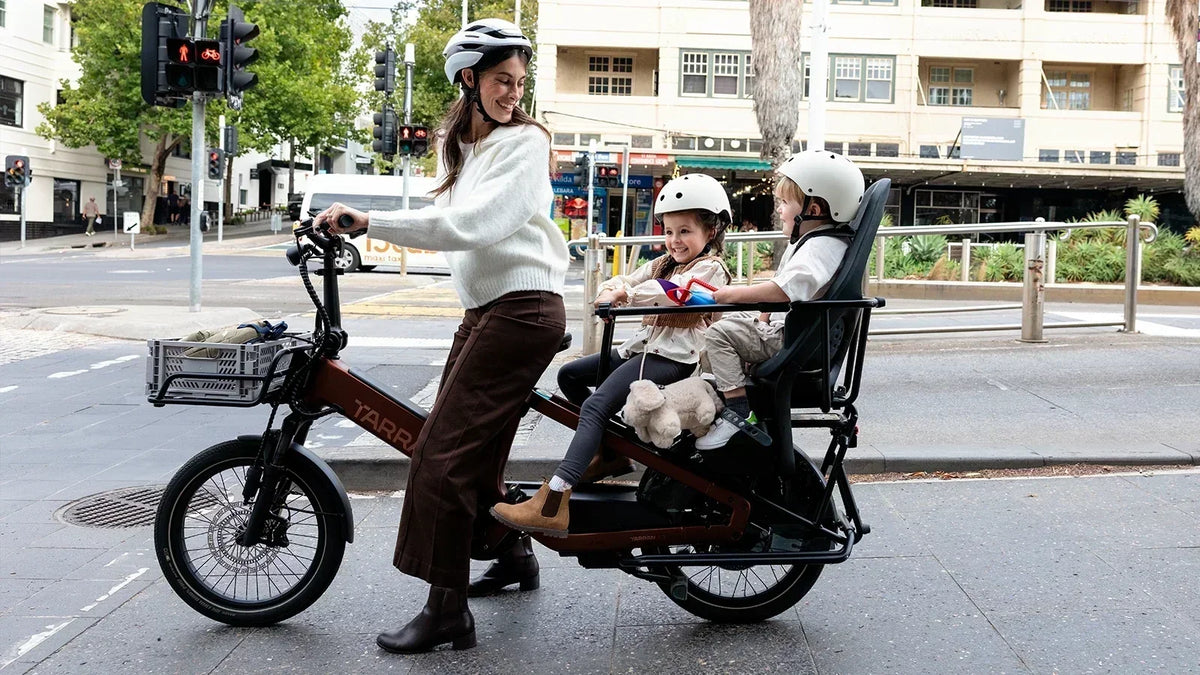
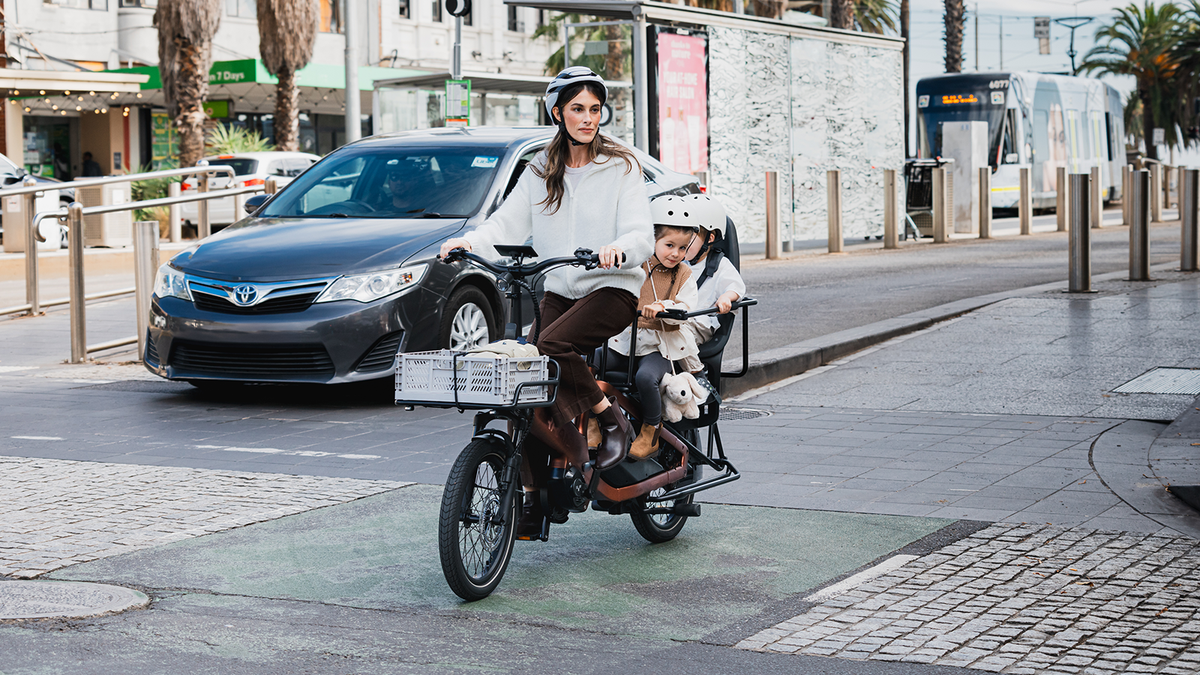
For accessories, the actual configuration is what matters. If a longtail is used in the morning with two child seats, a safety rail, footboards, and double panniers, that exact equipment must be included in the weighing or calculation. For occasionally fitted parts, it can be useful to calculate two scenarios: a family trip and a shopping trip without seats.
Trailers and Individual Limits
A safety margin accounts for varying luggage weight and measurement errors. However, it does not replace the separate limits for the rear rack, box, child seats, or trailer approval.
How Do You Calculate the Available Payload?
Available payload is the permissible gross weight minus the actual ready-to-ride weight of the bike. To determine the remaining cargo capacity, subtract the rider, passengers, and any additional accessories not already included in the bike weight.
Two Everyday Formulas
The basic formula is:
Available payload = permissible gross weight − actual bicycle weight
For the remaining cargo capacity:
Remaining cargo capacity = payload − rider − children − additional accessories
For the TARRAN T1 Pro, the stated permissible gross weight is 220 kilograms and the stated bike weight is 65 kilograms. Before calculating, check whether this weight includes the main battery, stand, and standard equipment. This leaves a calculated 155 kilograms for the rider, passengers, accessories, and cargo. In an example with a 90-kilogram rider, two children weighing 18 kilograms each, and 9 kilograms of accessories, the calculated reserve is 20 kilograms: 220 − 65 − 90 − 36 − 9 = 20.
Use Model-Specific Figures Correctly
This 20-kilogram reserve does not mean it may be placed anywhere on the bike. According to current product information, the TARRAN T1 Pro also has a maximum rider weight of 100 kilograms, a front load limit of 65 kilograms, and a rear load limit of 27.5 kilograms. The example remains within all limits only if people and cargo are distributed appropriately and the designated seating and restraint systems are used.
For the TARRAN L1 Series, the current product page states a permissible gross weight of 215 kilograms. For both the L1s and L1m, check the current specification sheet or manual for the exact bicycle weight and whether it includes the battery. Do not combine figures from different versions; any calculation must use the selected model with its battery and accessories.
Individual items of luggage, child seats, or batteries can be weighed with a household scale. For the complete bike, the specification sheet, manual, or a specialist dealer is generally more reliable.
If several people use the same cargo bike, calculate the load for the heaviest typical rider. This helps preserve sufficient capacity when children, shopping, and accessories are added.
How Should the Rider, Children, and Cargo Be Distributed?
Distribute the rider, children, and cargo so that every individual limit is observed and heavy items sit low and are secured against movement. The total may be mathematically permissible while still being poorly distributed. Loads positioned high or to one side particularly affect starting, steering, and braking.
Account for People First
A practical loading plan starts with fixed weights: the bike, battery, rider, and permanently installed accessories. Then add each child’s actual weight. Only the remaining capacity is available for shopping, school bags, or tools. On a longtail, two equally heavy bags are generally better placed on opposite sides than together on one side.
Place heavy objects as low as possible and close to the load area designed for them. This reduces overturning forces, but the cargo must not obstruct straps, steering, brake lines, or feet. After loading, conduct a short check away from traffic to confirm that the bike remains upright, starts controllably, and stays stable under braking. Children should board only when the bike is securely supported.

Distribute Cargo Low and Evenly
The unloading sequence also matters. Removing a heavy bag from one side first can cause a previously balanced bike to tip. A stable stand and a calm, level surface reduce this risk but do not replace holding the bike securely.
Why Are Front and Rear Load Limits Different?
Front and rear loads differ because their forces enter the frame, steering, and wheels at different points. Remaining gross-weight capacity therefore cannot be transferred from the front box to the rear rack or vice versa. Each load carrier has its own structural limit.
Center of Gravity and Handling
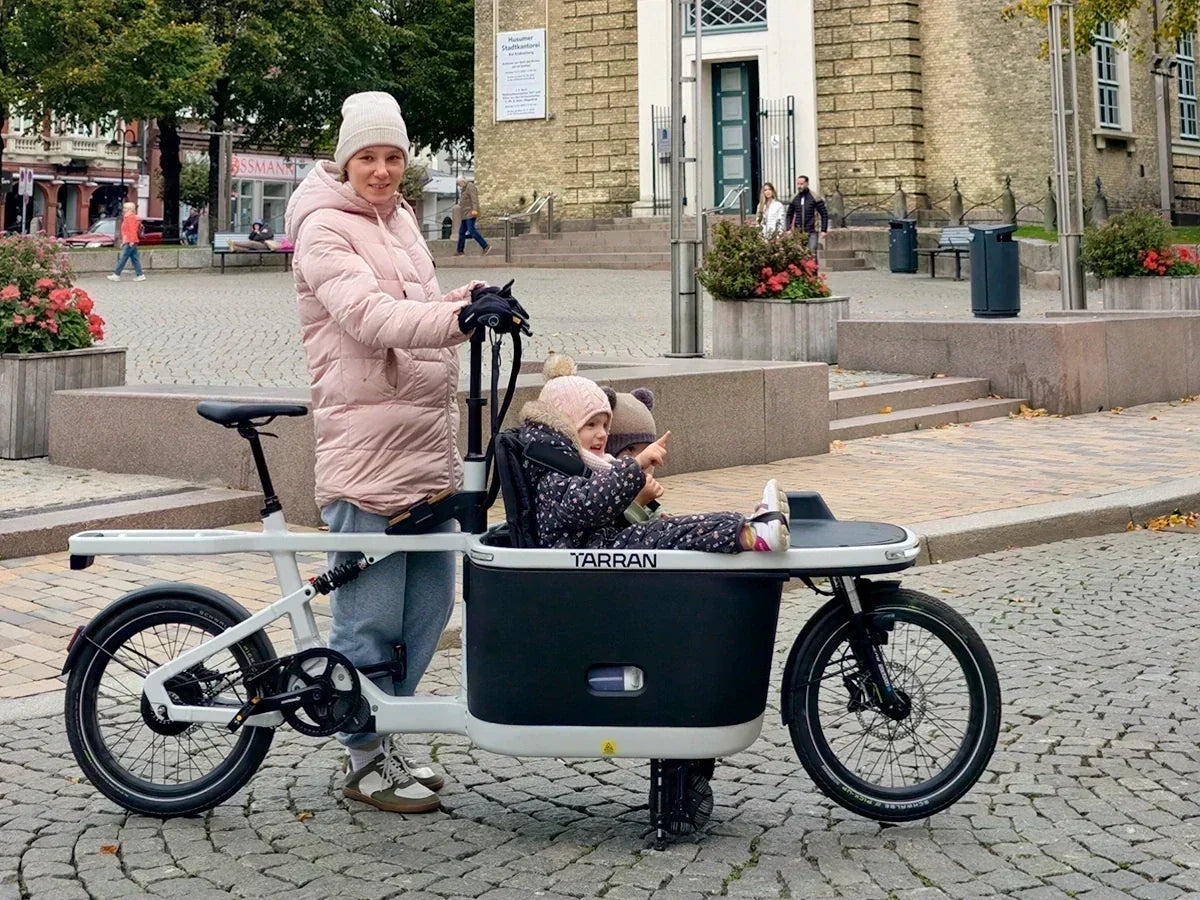
On a Long John, the box sits between the handlebars and front wheel or in front of the rider. The load affects steering feel and front-wheel contact but usually remains clearly visible. On a longtail, the load sits behind the rider, above or beside the rear wheel. A high rear load can reduce weight on the front wheel and increase side-to-side lean while parked.
In its cargo bike glossary, the ADAC also notes that possible payload depends on the permissible gross weight and rider weight. The specifications in the manual for the particular bike remain decisive.
Area-Specific Limits Remain Separate
For the TARRAN L1 Series, the current product page states a maximum rear load of 105 kilograms and a permissible gross weight of 215 kilograms. This does not mean that 105 kilograms may be added on top of the rider, bike, and any accessories; all limits must be met at the same time. The T1 Pro has different values and a front box. This comparison shows why every calculation must explicitly name the model and design.
Tire pressure and braking behavior also change under load. Follow the specifications on the tires and rims and in the manual. A test ride with a safely secured load that is increased gradually is more informative than riding an empty demonstration bike.
If the calculation leaves only a few kilograms of reserve, changes in cargo weight throughout the day also matter. The box may be empty on the outward journey but considerably fuller after shopping, pickups, and added clothing. The heaviest routine return trip is therefore a better buying scenario than the lighter outward journey.
Calculate Your Own Payload Now
First, write down your heaviest typical use scenario: rider, children, seats, lock, bags, shopping, and possible additional batteries. Then compare these values with the permissible gross weight and the rider and cargo-area limits of the model you want.
For TARRAN models, the latest figures are available in the product specifications, manuals and downloads. Take your calculation to the test ride so that handling, braking behavior, and load distribution can be assessed directly.
Cargo Bike Payload and Weight Questions
Is Payload the Same as Cargo Weight?
No. Payload includes not only luggage but also the rider, children, and accessories. Remaining cargo capacity is what is left after these weights have been subtracted.
Must the Battery Be Included in the Gross Weight?
Yes, if it is mounted on the bike while riding. When a specification states “bicycle weight without battery,” the battery’s actual weight must be added to the calculation.
Can Unused Front Load Capacity Be Transferred to the Rear Rack?
No, unless the model-specific documentation expressly permits that configuration. The front box and rear rack have their own limits, regardless of remaining total capacity. Ten kilograms of unused capacity at the front therefore does not increase the load rating of an already fully loaded rear rack.
How Accurately Should Children and Luggage Be Weighed?
A reliable household scale is generally sufficient for individual people and items if a reasonable safety margin remains. When close to the limits, a suitable platform scale or professional weighing is more accurate. Repeat the measurement when shopping loads vary greatly or when children, accessories, and seasonal clothing have become noticeably heavier.
Does a Second Battery Reduce Payload?
Yes. Its weight is part of the total moving mass. It increases the available energy but reduces the capacity for people and cargo by its own weight. Use its actual weight, including any bag or holder, rather than only a cell or battery specification.

Leave a comment
This site is protected by hCaptcha and the hCaptcha Privacy Policy and Terms of Service apply.