

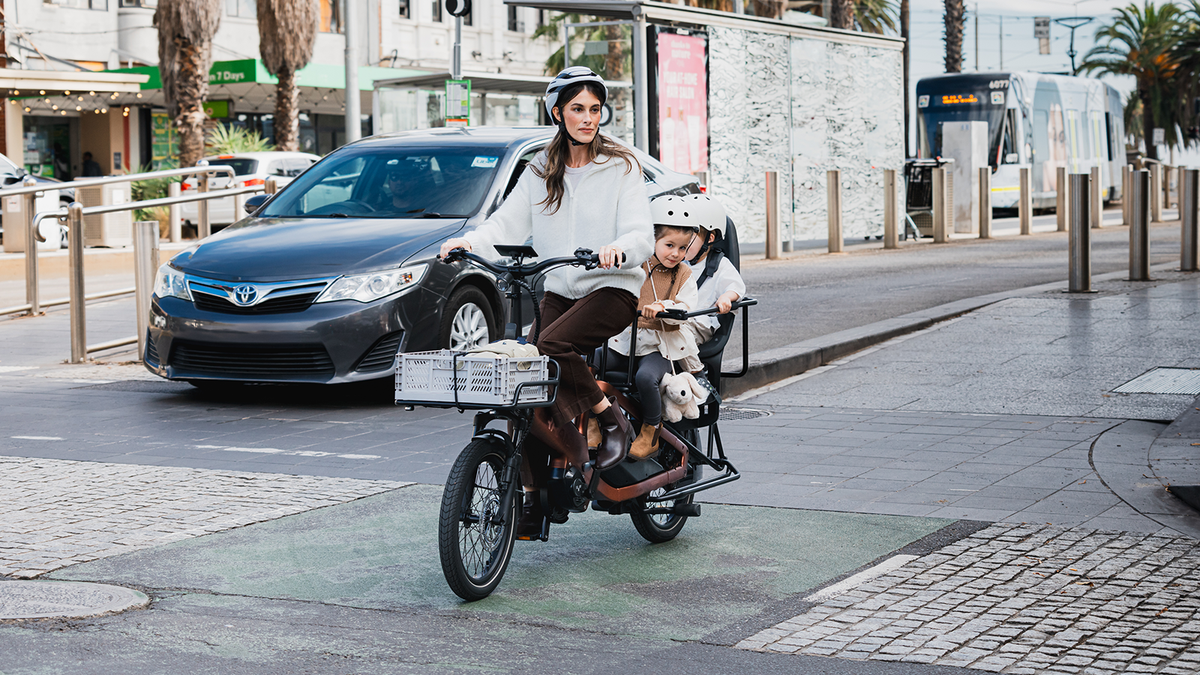
Many cargo e-bikes have 20-inch wheels because this means the loading area and luggage can be placed lower. The lower center of gravity makes loading, stopping and slow maneuvering easier. However, small wheels do not automatically increase comfort: tire volume, air pressure, frame geometry and suspension determine how smoothly the e-bike rolls over poor roads.
The size is therefore a constructive component, not a quality level. Compact e-bikes, long-tail e-bikes and front loaders each use 20 inches for different reasons.

How Does Wheel Diameter Affect the Center of Gravity?
A smaller wheel lowers the axle and creates space to bring the luggage rack, treads or box floor closer to the ground. This means the load sits lower, which can reduce tipping movements when driving slowly and maneuvering. This position is particularly noticeable with children or heavy shopping bags.
However, the wheel diameter alone does not determine the center of gravity. Battery, motor, frame, seating position and actual load work together. A poorly loaded bike with 20-inch wheels can be more unstable than a well-designed model with larger wheels.
When it comes to cargo bikes for transporting children, the ADFC explains the connection between small 20-inch wheels and a lower center of gravity, especially for longtails. Technically, the advantage only arises when the frame uses it: a low-positioned luggage rack and low footrests bring the load closer to the road. A small tire under an unchanged high structure would waste the potential.
A low center of gravity reduces the tipping moment when the load moves sideways. However, it does not prevent tipping. Children must be secured in the designated seats, bags must be evenly distributed and heavy objects must be as low as possible. When getting on and off, an adult holds the bike, even if a sturdy two-legged stand is mounted.
A useful test ride includes pushing slowly, climbing with the wheel held, tight turns and a typical bad spot. The bike is then loaded correctly and the same process is repeated. This shows whether the low center of gravity actually helps, whether the steering remains smooth under load and whether the tires and suspension provide enough comfort. The tire pressure corresponds to the recommendation for the tested load.
Small wheels do not automatically accelerate better because of their lower rotating mass, as cargo rims, robust tires and hubs can be heavy. The overall vehicle weight, the gear ratio, the motor and the distribution of the load are important factors for the starting feeling. Likewise, a large bike does not automatically mean smoother running if the frame geometry or load is unfavorable. A useful comparison uses two fully adjusted wheels on the same route. This tests low speed, curves, braking, a bump and pushing. Only this overall picture shows whether 20 inches actually provides the more suitable geometry for your everyday life.
Why Do Small Wheels Make Loading Easier?
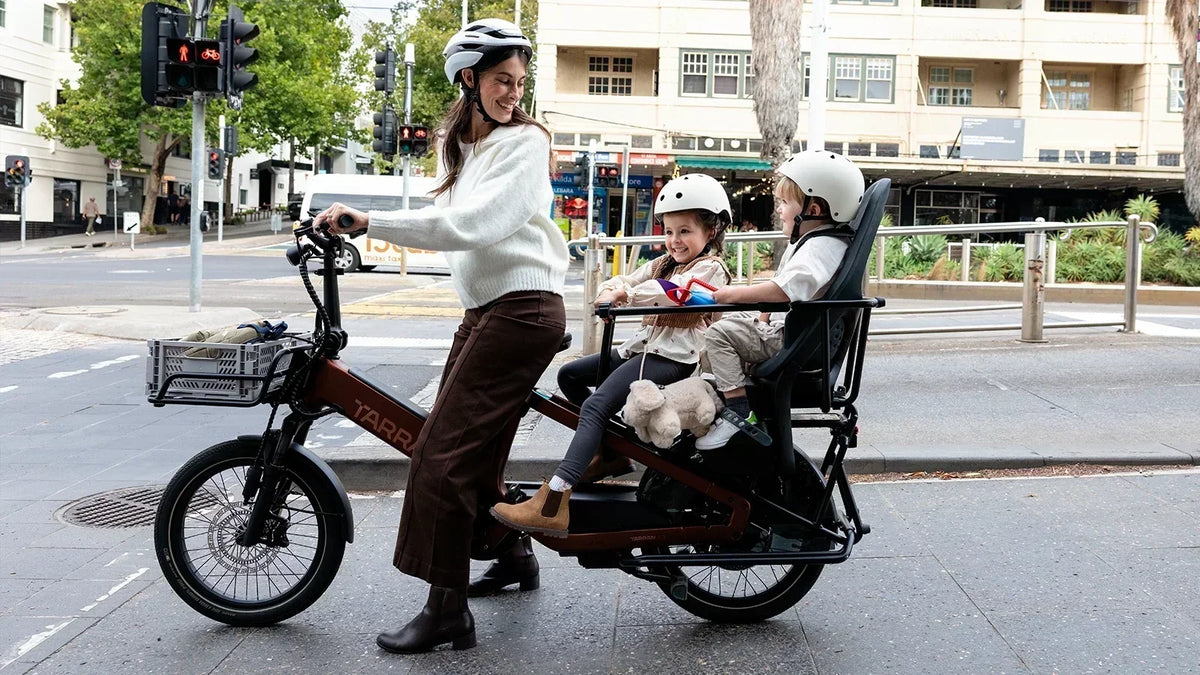
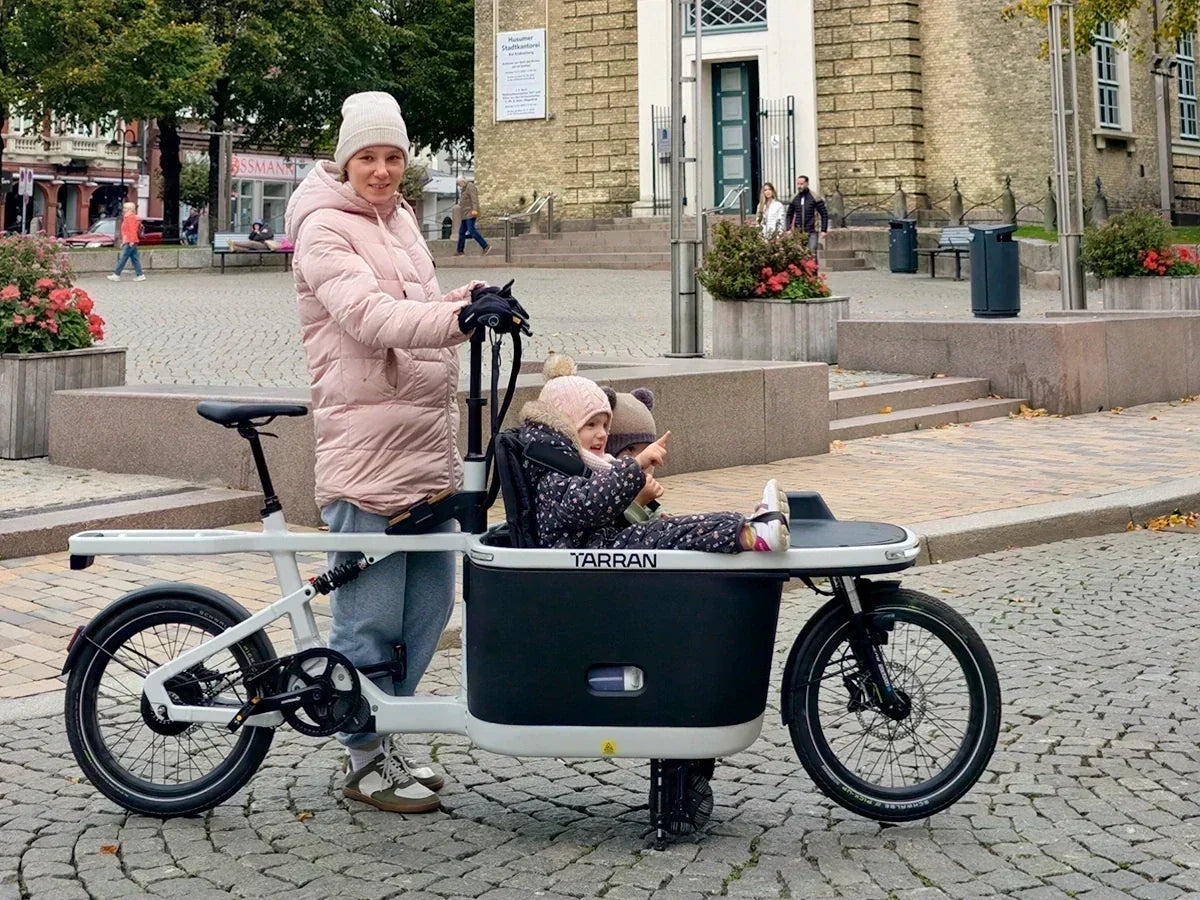
A low loading height shortens the distance that boxes or bags have to be lifted. With the Longtail, children sit closer to the ground and the footrests can be lower. With the front loader, there is more space above the small front wheel for a spacious box without making the top edge unnecessarily high.

Small wheels also allow for a compact overall length or more usable space within the same length. This helps in elevators, bicycle cellars and narrow parking spaces. This means that a compact e-bike remains manageable, although its frame can be reinforced for heavy loads.
The smaller height creates space for designers. On a front loader, the box can sit lower between the steering column and the front wheel; with the longtail, the top edge of the rear carrier sinks. This means that it takes less time to lift a drinks crate and children can reach the footrests more easily. At the same time, the frame above the bike can use more space for railings, bags or a compact overall length.
When it comes to storage rooms, it's not just the length that counts. Small wheels allow some compact e-bikes to have foldable handlebars or a low vertical parking position. Before purchasing, the overall width, handlebar height and weight must still be measured. A 20-inch bike with a wide box won't automatically fit through a narrow basement door, and a heavy longtail remains difficult to carry up a staircase.
During the test drive, several fit points must be practically checked:
- Adjustment range of saddle and handlebars
- safe ground contact when stopping
- Distance between feet, loading zone and accessories
- safe entry and complete spoke protection for children
When comparing geometry, these criteria are more meaningful than the number of inches alone:
|
criterion |
Practical question |
|
Loading height |
How high do boxes or children have to be lifted? |
|
Handling |
Do the turning circle and balance suit your daily commute? |
|
comfort |
Are the tire volume, air pressure and suspension correct for the surface? |
|
Turn off |
Does the bike fit through the door, elevator and parking space? |
How Do 20-Inch Wheels Affect Comfort?
Small wheels hit edges at a steeper angle than large ones and are therefore more likely to respond to potholes, curbs or cobblestones. Wide tires with the right air pressure and, if necessary, suspension compensate for some of this. A stable rim does not contribute to comfort, but rather to ensuring that the wheel remains dimensionally stable under high loads.
The shorter wheel circumference also changes the gear ratio. Manufacturers adapt the chainring, sprocket and motor software to ensure that the cadence and top speed remain suitable for everyday use. That's why a 20-inch cargo bike should be ridden as a complete system and not evaluated based on tire size alone.
For compact bikes, the ADFC describes that small 20-inch wheels can transmit shocks more clearly and wide tires with lower permissible air pressure mitigate the effect. This explains why many cargo e-bikes use voluminous tires. What is crucial is a pressure within the manufacturer's limits that matches the axle load; Simply releasing air is not a universal comfort solution.
Edge height and speed determine how hard a blow hits the wheel. A small wheel climbs steeper over the same edge than a large one. Anyone who frequently rides on cobblestones or damaged bike paths should therefore test the tire volume, casing and suspension together. A suspension seat post improves rider comfort, but does not automatically protect children or cargo in an unsprung box.
The air pressure is considered separately for the front and rear wheels. A front loader often carries more weight at the front when loaded, a longtail usually at the rear. Identical pressure on both wheels is therefore not automatically correct. The starting point is the limits of tires, rims and bicycle manufacturers; The axle load and surface are then adjusted within this range. Regular measurements are carried out when the tires are cold using a reliable pressure gauge.
Puncture protection is more than just comfort on a heavy e-bike. A sudden loss of pressure changes steering and stability, and pushing a loaded cargo bike can be difficult. A robust carcass, correct rim tape and appropriate pressure reduce risks, but do not prevent every puncture. Repair kit, appropriate hose size and accessible breakdown assistance are part of the tour planning.
Which Tire Width Suits Heavy Loads?
Above all, high payloads require a tire with sufficient load capacity for the respective axle. Wider models offer more air volume and can improve comfort and traction, provided the rim, frame and mudguard fit. The sidewall information on load and pressure as well as the bicycle manufacturer's specifications are more binding than a general minimum width.
The front and rear wheels carry different loads depending on the cargo design. That's why different dimensions on a bike can make sense. Tire pressure is coordinated with the driver, load and surface and is regularly checked cold; The limits stated on the tire and rim must not be exceeded or fallen short of.
The technical data of the Schwalbe Pick-Up Cargo tire shows, for example, that load capacity, permissible pressure, carcass and e-bike approval are specified dimensionally. Such values only apply to the selected tire version. The load capacity of a single tire cannot simply be doubled and treated as the permissible total weight of the bicycle, because the frame, axles, rims and brakes have their own limits.
Width alone says little about resilience. Two tires with the same external width may differ in casing, rubber compound, puncture protection and maximum pressure. For high loads, the rim must also match the tire width and pressure. After changing a tire, a specialist checks whether the sidewall, mudguard and frame maintain enough clearance under load.
The spoke tension deserves special attention when carrying high loads. Small wheels can be structurally very stable, but loose or unevenly tensioned spokes lead to noise, lateral runout and additional stress on individual spokes. After the break-in phase and if there is new cracking, an inspection makes sense. Broken spokes aren't just replaced; the cause and tension of the entire wheel must be checked.
Rim width and tire width form a pair. A very wide tire on an unsuitable narrow rim can support itself differently under load than intended. Conversely, not every wide rim fits the frame and fork. ETRTO designations help with the clear choice of size: for 20 inches, the millimeter specification of the rim seat diameter is more reliable than the colloquial inch designation. The term “20 inches” stands for two different dimensions: 406 mm is common on cargo bikes, folding bikes and BMX, while 451 mm is found primarily on individual folding and recumbent bikes. The tires are not interchangeable, even though both are described as 20 inches. The ETRTO information is written on the tire sidewall, approximately in the form 55-406. For comparison: 26 inches is 559 mm, 27.5 inches is 584 mm and 28 inches is 622 mm.
When Do Larger Wheels Make More Sense?
Larger wheels usually roll more smoothly over bumps and hold the line more easily at higher speeds. They are a good fit for longer distances, rough trails or riders who prefer a classic bike feel. The loading height often increases, and the bike can become longer or less compact with the same transport capacity.
Mixed concepts often combine a small cargo bike front wheel with a larger rear wheel. This means the front box remains low, while the rear wheel can contribute to the familiar driving experience. With the long tail, however, many manufacturers rely on two small wheels in order to position the rear carrier and passengers low.
Larger wheels roll over bumps more flatly and often maintain direction more smoothly on long straight stretches. This can be more pleasant on fast commutes. The price is more installation space: a high rear rack makes it difficult for children to get on, a front box has to start higher above the front wheel or move further forward. Mixed variables attempt to resolve these conflicting objectives.
On a Long John, 20 inches at the front and 26, rarely 27.5 inches at the rear are common: the loading area remains low at the front, while a more familiar rolling feeling is created at the rear. Two 20-inch wheels are more suitable for compact longtails whose rear load should be low. No combination is generally superior. Wheelbase, steering angle, caster and frame stiffness influence the driving experience at least as much.
The smaller rim also changes the relationship between speed and wheel speed. The motor control and translation must be coordinated so that the cadence remains comfortable and the support expires in accordance with the law. Unauthorized changing of the wheel diameter can falsify the speed measurement. That's why only the wheel and tire sizes specified in the model documentation belong on the cargo e-bike.
A suitable spare parts concept pays off in everyday life. 20-inch tires are common, but not every width, carcass and load capacity is in stock in every workshop. The exact ETRTO size, tube or tubeless version and permissible load can be included as a note. Before long trips, it makes sense to have a compatible tube if the instructions provide for repairs along the way.
The German Road Safety Council points to increasing wheel loads on bicycles and cargo bikes and calls for clear tire-load information. For buyers, this leads to a practical rule: compare more than wheel diameter and tread. Check the documented load capacity of every component and the approval of the complete bicycle.
Compare the Right Geometry
Twenty inches is particularly convincing when low loading height, compact dimensions and a low center of gravity are important. Larger wheels can appear smoother on long or uneven routes. Only the comparison with a typical load shows which combination of wheel size, tires, suspension and frame geometry suits your everyday life.
What these considerations actually look like can be seen in the TARRAN L1 series. Both variants run on 20-inch wheels and, with a total length of around 1,960 mm, remain significantly shorter than a typical front loader. This is exactly the purpose of the small bikes: the rear rack sits low, the footrests remain within reach of children, and the bike fits more easily into a bicycle cellar or elevator than a two-meter-long Long John. For your own comparison, the model-related information is decisive, not the number of inches.
You can arrange a test drive with a typical load using the TARRAN dealer search. The sequence of slow maneuvering, tight curves and poor surfaces shows more than any data sheet.
FAQs about 20-inch wheels on the cargo e-bike
Are 20-Inch Wheels Slower?
Practically not in everyday life. Smaller wheels tend to have a little more rolling resistance with the same tires and pressure, but on a Pedelec with support up to 25 km/h this is hardly a problem; the translation is adapted to the smaller wheel circumference.
Do Small Wheels Always Need Wide Tires?
No, but more tire volume can improve comfort and traction. The decisive factors are load capacity, rim compatibility, clearance and manufacturer approval.
Is a 20-Inch Cargo Bike Suitable for Cobblestones?
Yes, if tires, air pressure and possibly suspension are designed appropriately. A test drive on the typical surface shows whether comfort and control are sufficient.
Are 20-Inch Wheels Strong Enough for Heavy Loads?
Yes, if the wheel, rim, spokes, tires and axle are designed for the intended load. The decisive factor is the approved axle and total load of the complete cargo e-bike.
Can 20-Inch Wheels Be Replaced with Larger Ones?
Usually no. A different diameter changes geometry, ground clearance, braking position and gear ratio; A conversion is only permitted and sensible with the express approval of the manufacturer.

Leave a comment
This site is protected by hCaptcha and the hCaptcha Privacy Policy and Terms of Service apply.