

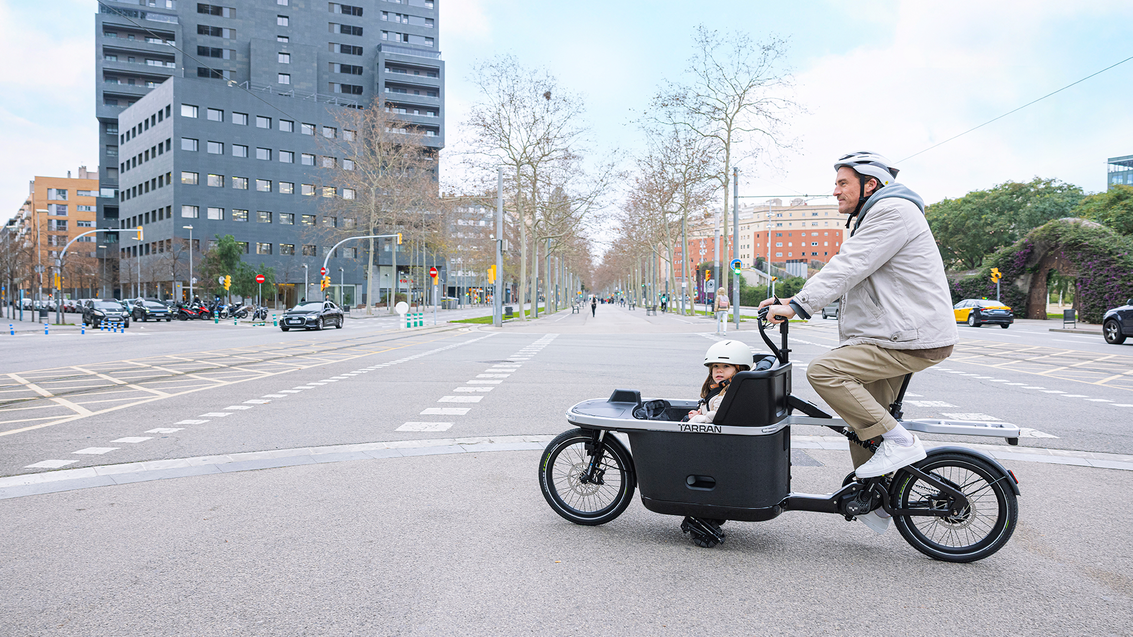
Selecting the optimal family transport vehicle defines your daily urban mobility. German cities present unique challenges, ranging from narrow cycle paths to strict StVO regulations. Your decision impacts safety, budget, and handling significantly. We compare the electric cargo bicycle against the versatile trailer setup to help identify the perfect match for your specific logistics and family needs.
Overview of Cargo Ebike vs. E-bike With a Trailer
An electric cargo bike (or e-cargo bike) integrates the carrying capacity directly into the frame. Two main styles dominate: the "Long John," featuring a box located between the handlebars and the front wheel, and the "Longtail," extending the rear rack to accommodate passengers or panniers. These vehicles function as dedicated transporters, engineered specifically to haul heavy loads with an extended wheelbase and reinforced components.
German road traffic regulations (StVO) distinguish clearly between these categories. While trailers limit passengers to two children up to seven years old, e-cargo bikes face no age restriction for passengers, provided the manufacturer installs suitable seats. Such a distinction allows cargo bikes to transport older children or even adults, offering utility that extends well beyond the kindergarten years.
Conversely, an e-bike with a trailer consists of a standard Pedelec coupled with a detachable carriage. The trailer connects via a hitch to the rear axle. Disconnecting the carriage leaves you with a standard electric bike for solo commuting, offering modularity that integrated frames cannot match. It is crucial to note that S-Pedelecs (supporting speeds up to 45 km/h) are generally prohibited from towing child trailers in Germany, whereas standard 25 km/h Pedelecs are permitted.
Cargo E-bike Vs E-bike+Trailer: Cargo Capacity and Load Flexibility
Volume and weight limits often dictate the superior choice. An electric cargo bicycle generally outperforms a trailer regarding pure payload. Many two-wheeled "Long John" models support up to 100 kg in the box alone, while heavy-duty three-wheelers can carry even more. Longtails excel at carrying older children who have outgrown the trailer's legroom. The open-box design accommodates awkward shapes, such as musical instruments, large grocery hauls, or even a Christmas tree.
Trailers typically cap their load between 40 kg and 60 kg to maintain structural integrity and braking safety. While sufficient for two toddlers and a small diaper bag, the enclosed cabin restricts the transport of taller items. However, trailers offer superior weather protection standardly included, creating a cozy "cocoon" for infants. Cargo bikes often require purchasing expensive rain covers as separate accessories.
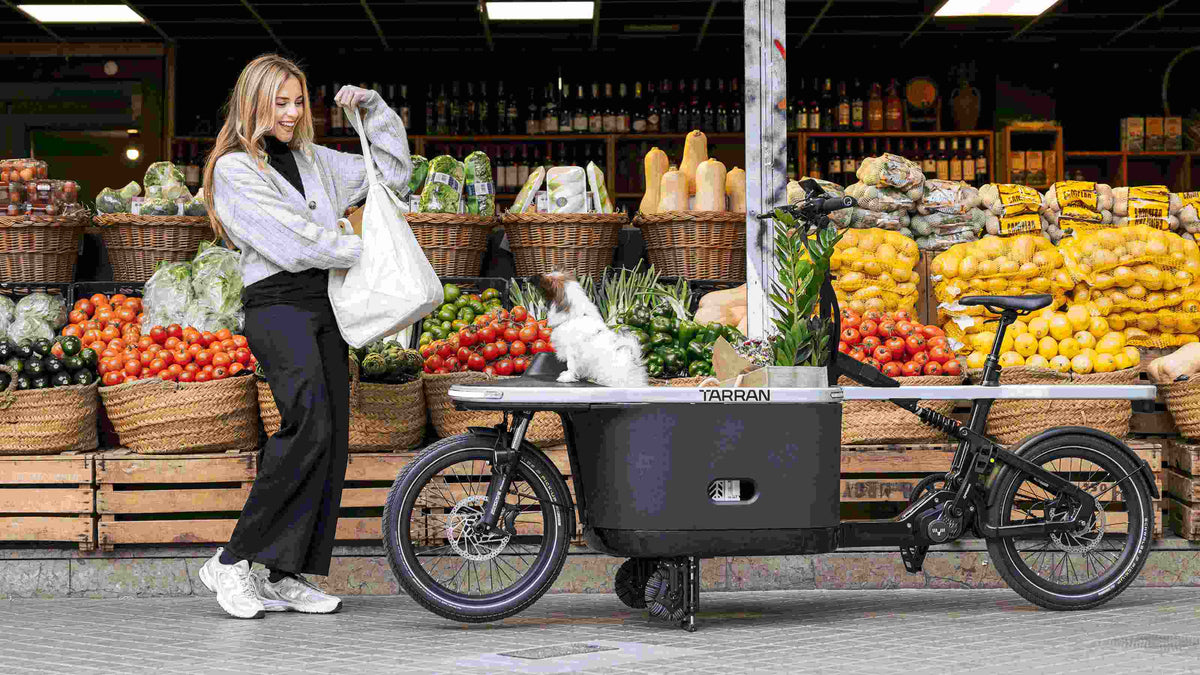
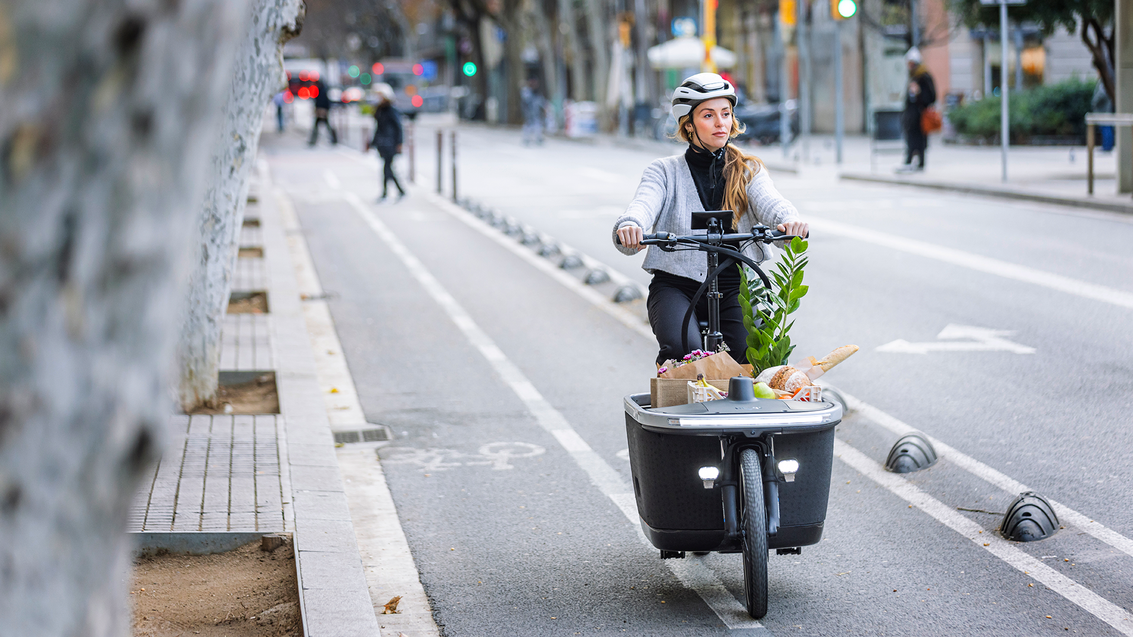
For those demanding maximum capacity without compromising modern handling, the TARRAN T1 Pro exemplifies high-performance engineering. Its Dynamic Dualdrive™ Landing Gear automatically deploys to stabilize the bike when stopped, eliminating the struggle of balancing heavy loads. Supporting a 220kg total weight and accommodating three Euroboxes or two children, it merges heavy-duty utility with intelligent TarranOS monitoring for a refined ride.
Cargo E-bike Vs E-bike+Trailer: Riding Stability and Handling Differences
The riding experience differs drastically between the two systems. E-cargo bikes provide a unified, integrated ride. Since the load sits within the frame's wheelbase, the center of gravity remains centralized. Once a rider masters the linkage steering of a Long John, the bike feels responsive and agile in traffic. You maintain a direct line of sight with your passengers in a front-loader, facilitating communication and immediate monitoring.
Towing a trailer introduces a "push-pull" dynamic. The additional weight behind the rear axle can affect braking distances and cause the bike to surge forward during sudden stops. Cornering requires a wider radius to prevent the trailer wheel from clipping the curb. Furthermore, the trailer creates a three-track vehicle profile (bike wheels plus two trailer wheels), rendering pothole avoidance difficult. On uneven terrain or in snow, the drag from a trailer becomes significant, whereas a cargo bike cuts a single path through the elements.
Reversing presents another challenge. Backing up with an articulated trailer in tight urban spaces often leads to jackknifing, forcing the rider to dismount and uncouple the unit manually. In contrast, a cargo bike reverses intuitively, functioning as a single rigid unit. Winter riding also favors the integrated bike; the extra weight over the wheels improves traction, whereas a light towing bike might struggle for grip while pulling a heavy dead weight through slush.
Cargo E-bike Vs E-bike+Trailer: Storage and Parking
Urban infrastructure often favors the modularity of a trailer. If you dwell in an Altbau apartment without a ground-level bike room, hauling a 50 kg electric cargo bicycle up stairs remains impossible. Standard cellar doors in Berlin often measure around 80cm, which may block wider three-wheeled cargo bikes. A trailer detaches easily, folds flat, and can be stored in a cellar or carried into an apartment, leaving the lighter e-bike locked outside or brought indoors separately.
Parking an electric cargo bike requires a dedicated spot, similar to a small motorcycle. While robust, leaving such an expensive machine on the street overnight ("lantern parking") invites theft and weather damage. Additionally, German cycling infrastructure frequently employs "Drängelgitter" (offset barriers) to slow cyclists at crossings. Long cargo bikes often fail to navigate these tight chicanes, forcing riders to dismount or find alternative routes. A trailer user can simply unhitch the unit, push the bike and trailer through separately, and reconnect on the other side.
Furthermore, transporting the vehicle on Deutsche Bahn (DB) trains presents a major hurdle. Long cargo bikes are frequently banned from Intercity (IC/ICE) trains and even some regional lines due to their length and bulk. A trailer, once collapsed, counts as luggage, allowing the towing bike to be booked as a standard bicycle, maintaining travel flexibility for family holidays.
Cargo E-bike Vs E-bike+Trailer: Cost and Long-Term Value
Financial considerations extend beyond the initial purchase price. E-cargo bikes represent a significant investment, with quality models ranging from €4,000 to over €8,000. Their specialized components—heavy-duty tires, reinforced brakes, and high-torque motors—incur higher maintenance costs. Depreciation also hits harder; as battery and motor technology advances, older integrated e-bikes lose value faster, potentially dropping 50% in value within three years.
Starting with a trailer costs significantly less, assuming you already own a robust Pedelec. Premium trailers retain their resale value exceptionally well, often recovering 60-70% of the new price after three years of use. Maintenance on a trailer involves minimal effort: checking tires and hitch coupling. However, using a standard electric bike to tow heavy loads accelerates wear on its drivetrain and brakes. Over time, frequent heavy towing might necessitate upgrading to a more robust e-bike, narrowing the total cost gap.
Insurance also differs. A trailer is often covered under standard household insurance (Hausratversicherung) as a bicycle accessory. An expensive electric cargo bicycle often exceeds the coverage limits of standard policies, necessitating a specialized bike insurance policy to protect against theft and vandalism, adding to the monthly running costs.

Cargo E-bike Vs E-bike+Trailer: Safety
Safety debates often center on visibility and crash dynamics. ADAC crash tests suggest that in a collision with a car, a trailer often fares better. The trailer tends to be pushed aside rather than crushed, and the integrated roll cage protects the occupants. However, the low profile of a trailer renders it less visible to drivers, necessitating tall safety flags and bright lighting.
Electric cargo bikes offer superior visibility due to their size and presence on the road. The rider protects the cargo area with their body and the bike's frame. Yet, if a two-wheeled cargo bike tips over on a slippery patch, the passengers fall with it. Three-wheeled models or bikes equipped with stabilizers mitigate such tipping risks. StVO regulations strongly recommend helmets for all children, regardless of the transport method, and strapping passengers in remains mandatory for both systems. Parents should also consider the "crumple zone" aspect; in a frontal collision, the cargo box absorbs impact, whereas on a standard bike, the rider is the first point of contact.
Which Option Fits Your Riding Needs
Selecting the right tool depends on your specific environment and routine.
| Feature | Electric Cargo Bike | E-bike + Trailer |
|---|---|---|
| Terrain | Paved roads, bike lanes. | Versatile; handles gravel/forest paths. |
| Handling | Agile, integrated feel. | Articulated, requires wide turns. |
| Capacity | High (2-4 kids / 100kg+). | Moderate (1-2 kids / 45kg). |
| Storage | Needs garage/courtyard. | Folds for apartment/cellar. |
| Age Range | Infants to Adults. | Toddlers to 7 years. |
| Interaction | Direct conversation (Front loader). | Limited (Kids behind rider). |
| Flexibility | Dedicated transporter. | Modular (Bike usable alone). |
| Transport | Hard to take on trains. | Easy (Trailer folds as luggage). |
For families living in hilly suburbs with a garage, the electric cargo bicycle replaces a second car effectively. It manages the school run and grocery shopping in a single trip. Conversely, city dwellers with limited storage or those who enjoy weekend recreational rides on forest trails will find the trailer setup more accommodating. The ability to drop the trailer at daycare and continue to work on a light, unencumbered bike offers a logistical advantage for many parents.

Leave a comment
This site is protected by hCaptcha and the hCaptcha Privacy Policy and Terms of Service apply.