


Germany is currently witnessing a silent transformation on its streets, where the roar of combustion engines gradually yields to the quiet hum of electric motors. In cities like Berlin, Hamburg, and Munich, families are trading the second car—the Zweitwagen—for a more agile, eco-conscious alternative: the Front Load Cargo Bike, or "Long John." Such a vehicle offers a liberating blend of utility and freedom, turning the daily school run or the weekly trip to the Getränkemarkt into an engaging experience rather than a chore. Navigating urban environments becomes fluid, reconnecting riders with their surroundings while effortlessly managing the heavy logistical demands of modern family life.
A Brief History of the Long John Cargo Bike
The Long John is frequently mistaken for a modern innovation born of contemporary environmentalism, yet the lineage stretches back nearly a century. In 1929, a Danish mechanic named Morten Rasmussen unveiled the first iteration of the design in Denmark. The vision was purely utilitarian: a bicycle capable of navigating the narrow, cobbled alleys of Copenhagen while hauling loads that would overwhelm a standard cycle. Smith & Co. (SCO), based in Odense, became one of the primary manufacturers, and for decades, these machines served as indispensable workhorses for plumbers, bakers, and butchers across Scandinavia.
During the mid-20th century, other manufacturers like Urania joined the market, solidifying the Front Load Cargo Bike as a staple of industrial transport. However, the post-World War II era introduced a challenge; the rise of the internal combustion engine and affordable automobiles led to a sharp decline in cargo bike usage.
It was not until the oil crisis of the 1970s and a subsequent shift toward sustainable urban planning that Long John experienced a renaissance. Today, the design has evolved from a rough industrial tool into a sophisticated Family Cargo Bike, engineered to transport the most precious cargo of all: children. The modern resurgence is not merely a trend but a return to a highly efficient form of urban logistics that predates the dominance of the car.

What Exactly Is a Long John Cargo Bike?
A Long John is a distinct category of freight bicycle, easily differentiable from the Longtail (extended rear rack) or the Trike (three wheels). The defining characteristic is the positioning of the cargo area: a low, flat platform situated directly between the rider and the front wheel. Such a configuration results in a significantly extended wheelbase, often exceeding 2.5 meters. The pilot sits behind the load, steering the front wheel via a linkage system—either a rigid rod or modern cables—that runs underneath the cargo bed.
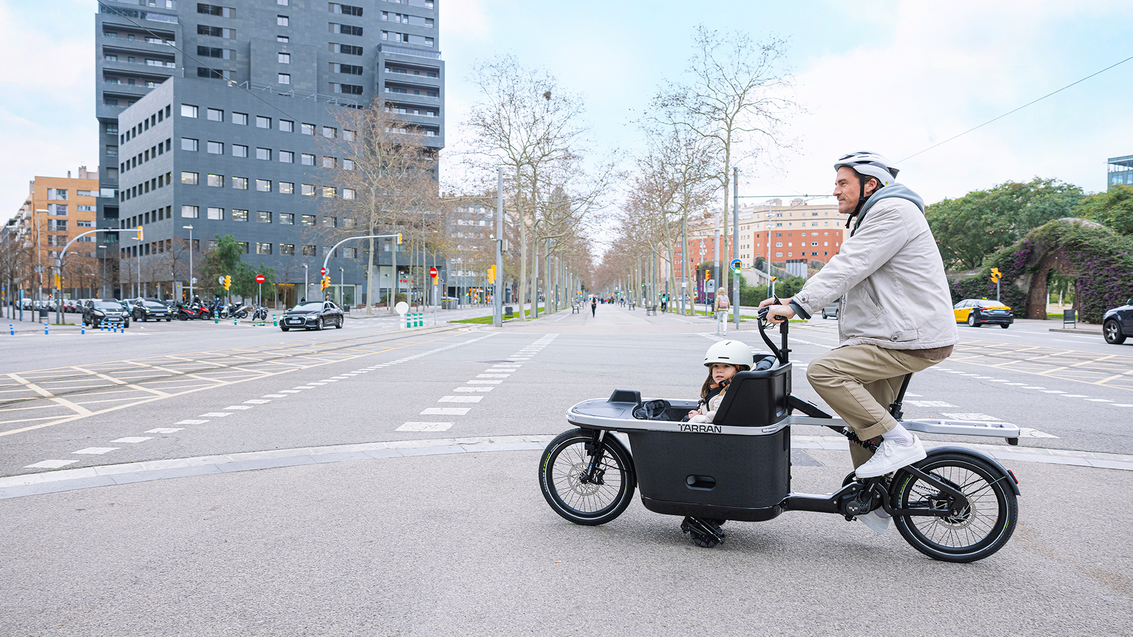
The primary advantage of such geometry lies in the center of gravity. Because the heavy payload sits low to the ground, the bicycle remains remarkably stable once in motion, handling much like a standard cycle despite the length. The rider maintains a clear, unobstructed view of the cargo area, a feature particularly valued when transporting children.
Unlike a rear trailer, where passengers are towed out of sight, the Long John facilitates constant interaction and monitoring, creating a shared journey rather than mere transport. Such a layout allows for heavier loads than a rear rack can safely manage, without compromising the balance or ride quality essential for city commuting.
Anatomy of a Long John Cargo Bike
Understanding the capabilities of a Long John requires a close examination of the components, as each part plays a critical role in safety and performance.
The Frame and Cargo Box
The structural spine is typically a low-step frame crafted from aluminum or steel, designed to handle gross vehicle weights often exceeding 200kg. The "Bak" (box) mounted upon the front platform has evolved significantly. While early models used simple plywood, modern iterations frequently employ Expanded Polypropylene (EPP). EPP offers superior impact absorption and thermal insulation compared to wood, providing a safer and warmer pod for young passengers. The frame geometry allows for a comfortable, upright riding position, granting excellent visibility in traffic.
Steering Mechanisms
Separating the handlebars from the front wheel necessitates a remote steering system. Two dominant types exist:
- Rod Linkage: A rigid metal arm connects the steering column to the fork. It is robust and provides direct feedback, but often limits the turning radius, which can complicate maneuvers in tight spaces.
- Cable Steering: Two heavy-duty cables pull the fork left or right. Cable systems allow for a wheel rotation of nearly 90 degrees, offering a significantly tighter turning circle—a crucial asset when navigating compact German bike infrastructure or maneuvering into a Fahrradkeller (bike cellar).
Motor and Drivetrain
Given the substantial weight of a fully loaded bike, electric assistance is virtually mandatory. An Electric Cargo Bike typically uses a mid-drive motor, delivering torque directly to the cranks for a natural pedaling feel. The drivetrain must withstand immense stress; thus, many premium models utilize a belt drive (such as the Gates Carbon Drive) paired with an internal gear hub. Such a setup eliminates the maintenance and grease associated with traditional chains, a welcome feature for daily commuters wearing office attire.

The Kickstand Dilemma
Perhaps the most critical, yet frequently criticized, component is the kickstand. A Long John must remain immovable while loading groceries or buckling in children. Traditional double-leg stands often require the rider to physically lift the entire weight of the bike to deploy the legs—a recipe for back strain and instability. A failure here can lead to the bike toppling, a scenario every parent dreads. The width and stability of the stand determine whether loading children is a stress-free event or a balancing act.
Common Applications of Long John Cargo Bikes
The versatility of the Long John allows the vehicle to serve multiple roles within a German household, effectively replacing the need for a second automobile.
The "Elterntaxi" (Parent Taxi)
Transporting children to Kita (daycare) or primary school is the most common application. The front box provides a secure, enclosed environment protected from wind and rain. Under German Road Traffic Regulations (StVO), children must be seated securely, and while helmets are not legally mandatory for passengers, authorities universally recommend them. The cabin creates a cozy pod where siblings can interact, turning the commute into quality family time. Parents appreciate the ability to chat with their kids, pointing out city landmarks or discussing the day ahead, an interaction difficult to achieve in a car or with a trailer.
Urban Logistics and Shopping
A capable Long John easily replaces the trunk of a station wagon. The standard cargo area is often dimensioned to fit Euroboxes (400mm x 600mm), the standard container size for logistics in Europe. A trip to the supermarket or the Getränkemarkt becomes effortless, with ample space for two full beer crates and several bags of groceries. The low loading height means heavy items do not need to be lifted high, saving rider effort and reducing the risk of dropping goods. Weekend excursions to the park or lake become simple, as the bike swallows picnic blankets, balance bikes, and sports equipment with ease.
What is a Present-day Long John Cargo Bike Like?
Early Long Johns were heavy, steel beasts requiring immense skill to balance at traffic lights. Stopping and starting with a 50kg load in the front box could be nerve-wracking, as the rider had to manually balance the weight with their legs while stationary. The kickstand was a particular pain point; deploying a mechanical stand with two active children on board required a precarious balancing act that discouraged many potential adopters. Stability at low speeds, known as the "wobble," often intimidated beginners.
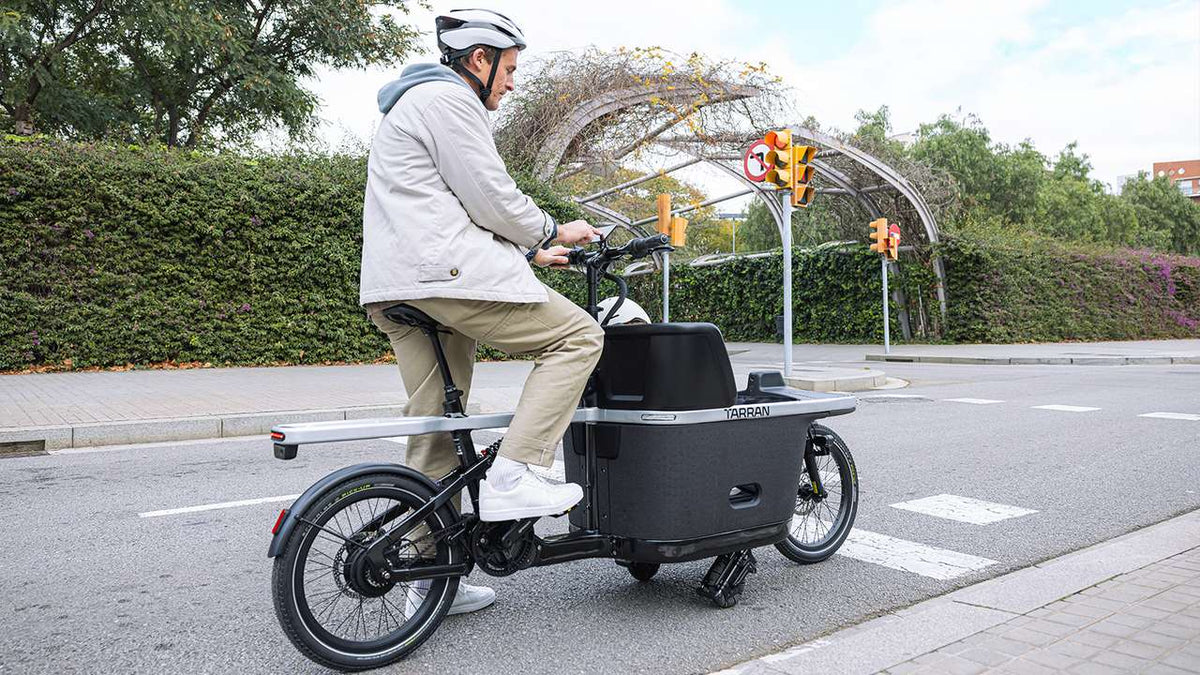
Modern engineering has addressed these friction points, moving beyond simple electrification toward intelligent integration. A prime example of such evolution is the TARRAN T1 Pro. It represents a shift from "bicycle with a motor" to "smart mobility vehicle," specifically targeting the stability issues plaguing traditional designs.

Solving the Stability Problem
Where standard cargo bikes struggle with low-speed wobbles—the unsteady start familiar to any parent carrying a heavy load—the TARRAN T1 Pro employs a Dynamic Dualdrive™ Landing Gear System. Instead of forcing the rider to manually heft the bike onto a kickstand, the T1 Pro automatically deploys small stabilizing wheels when the bike slows to a stop or is parked. The vehicle holds itself upright, solving the age-old problem of tipping over at traffic lights. The rider can simply step off without the anxiety of balancing a heavy load. Upon accelerating, the gear retracts automatically, allowing for a seamless transition to riding. Such a feature removes the physical strength barrier previously required to operate a heavy cargo bike.
Intelligent Safety and Integration
The TARRAN T1 Pro enhances safety with automotive-grade technology, including a 5.2-inch Retina display running TarranOS. This display provides real-time navigation and rear-view camera feeds, crucial when the cargo box obstructs the front wheel view or when navigating busy streets. The bike also features Sentry Mode, which alerts the owner via an app if unauthorized movement is detected and records video evidence through the onboard cameras.
In addition to these features, the T1 Pro integrates road detection and smart lighting for maximum safety. The bike’s system includes rear collision alerts, lane change assist, and high-intensity headlights that automatically switch between high and low beams. The position light ensures visibility, lighting up the rear when braking or detecting approaching vehicles from behind, keeping riders safe in any environment.
The drive system supports the heavy demands of family logistics with a mid-drive motor pushing 100 Nm of torque, significantly higher than standard e-bike motors, which often top out at 85 Nm. A dual-battery option offers a range of up to 200km, eliminating range anxiety for suburban commuters. It accommodates three standard Euroboxes or two children, secured within a frame equipped with full suspension—a luxury rarely found on utilitarian cargo frames. Such features fundamentally change the user experience, removing the physical strain of balancing and parking, leaving only the joy of the ride. Those interested in the specific technical configurations can explore the details at the manufacturer's product page.
Summary
The Long John has matured from a Copenhagen curiosity into a sophisticated transport solution capable of replacing the family car for nearly all intra-city trips. While the basic silhouette remains true to Morten Rasmussen’s 1929 vision, the user experience has been transformed through electrification and smart engineering. Innovations like the automatic landing gear on the TARRAN T1 Pro address the remaining barriers to entry—stability and ease of use—opening the world of cargo cycling to a broader audience. For the modern urban dweller, the question is no longer whether a bike can carry the load, but rather which smart features will best serve their daily life.
Frequently Asked Questions
Q1: Is it difficult to learn how to ride a Long John?
Learning requires a short adjustment period. Because the front wheel sits far forward, steering inputs feel different than those on a standard bike. New riders should look ahead at the horizon, not at the front wheel. Most people adapt within a few minutes of practice. The TARRAN T1 Pro's landing gear significantly reduces the learning curve regarding stopping and balancing, often the most intimidating aspect for beginners.
Q2: How do I park a Long John in the city?
Parking is generally easier than with a car. You can use designated bicycle parking spots or sidewalks, provided pedestrians are not obstructed. A reliable stand is crucial; the automatic landing gear on premium models creates a stable platform instantly, preventing the bike from tipping on uneven pavement or cobblestones.
Q3: Can I ride a Long John in the winter?
Yes. With proper tires (e.g., Schwalbe Winter Plus) and a rain cover for the box, year-round riding is feasible. The stability of the long wheelbase offers good traction on slippery surfaces. Many families use the bike throughout the German winter, employing blankets or footmuffs for children in the cargo box.
Q4: What insurance do I need?
While not mandatory like car insurance, specific cargo bike insurance is highly recommended due to the vehicle's value. Providers like Laka or ENRA offer policies covering theft, damage, and even battery issues. Some household policies (Hausratversicherung) may cover bikes, but checking the maximum insured value is vital, as cargo bikes often exceed standard limits.
Q5: Is a belt drive better than a chain?
For a cargo bike, a belt drive (like Gates Carbon Drive) is superior. It requires no lubrication, does not rust, and lasts significantly longer than a chain. It is particularly beneficial for riders who want to avoid grease stains on clothing and minimize maintenance intervals during the wet seasons.

Leave a comment
This site is protected by hCaptcha and the hCaptcha Privacy Policy and Terms of Service apply.