

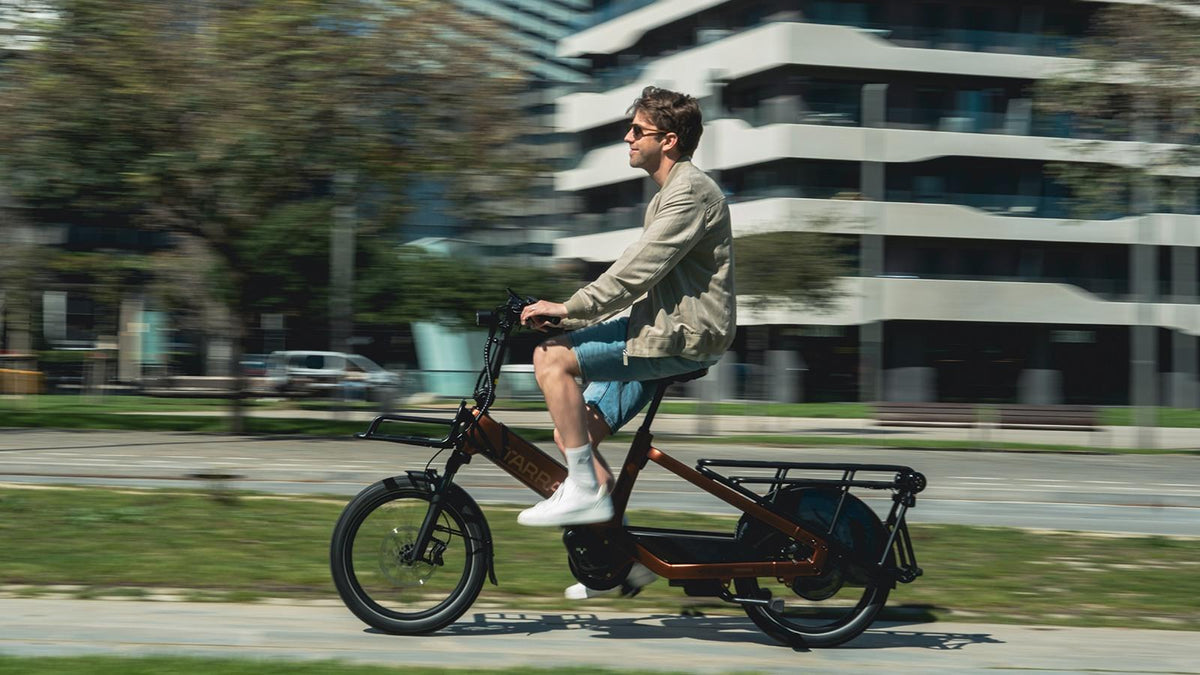
The dream of seamless urban travel often fades within the reality of gridlock and soaring fuel prices. Modern European cities now witness a fundamental shift toward the transport bicycle. Such vehicles offer a logical answer for adults seeking efficiency. The following analysis explores why a cargo e-bike stands as the premier candidate to replace the traditional family automobile.
The Rising Costs of Car Ownership vs. a Transport Bicycle.
The economic landscape for motorists in Germany and the broader European Union reached a volatile peak between 2020 and 2025. Data highlights a stark reality: the financial burden of a private internal combustion engine (ICE) vehicle grew at a pace far exceeding standard inflation. For instance, the price tag of a Volkswagen Golf jumped around 22 percent within five years, while larger models like the VW Touran saw price increases of up to 33 percent. Such a sharp rise in the initial purchase price constitutes only the beginning of the financial drain.
Beyond the showroom, the recurring expenses associated with vehicle ownership have transformed from a manageable monthly line item into a significant budgetary threat. Insurance premiums across Germany surged at a rate of 43.6 percent from 2020 to 2024, with projections for 2025 indicating a continuation of that trend. Fuel costs followed a similar trajectory; Super gasoline prices rose to an average of 1.672 euros per liter, representing a 33 percent hike, whereas diesel costs climbed over 43 percent to reach 1.594 euros per liter. Even owners of electric vehicles faced rising pressure, as household electricity rates for charging moved from 30.43 to 38.25 cents per kWh, a 26 percent increase.
When comparing these figures to the operational requirements of an e-bike, the disparity becomes overwhelming. A standard mid-sized car in a European city involves annual costs ranging between 7,600 euros and 13,500 euros when factoring in depreciation, fuel, insurance, and maintenance. Conversely, a high-quality electric cargo bike typically requires an annual expenditure between 300 euros and 1,100 euros. The cost to fully power a cargo bike electric model for an entire year of 10-mile daily commutes averages less than 3.00 euros in electricity—a sum that would barely cover a single liter of gasoline.
Annual Total Cost of Ownership Comparison (European Averages)
| Expense Category | Mid-Size Sedan (EUR) | Premium Cargo E-Bike (EUR) |
| Purchase Amortization (5yr) | 3,500 - 6,000 | 400 - 1,200 |
| Energy/Fuel Consumption | 1,200 - 3,200 | 25 - 50 |
| Mandatory Insurance | 500 - 1,500 | 0 - 150 (Optional) |
| Routine Maintenance | 600 - 1,200 | 100 - 300 |
| Parking Permits & Fees | 800 - 3,600 | 0 - 20 |
| Tax and Registration | 100 - 400 | 0 |
| Total Annual Cost | 6,700 - 15,900 | 525 - 1,720 |
The logic of the transition becomes even clearer through the lens of depreciation. A new car loses 15 percent to 25 percent of its value in the first twelve months alone. High-end transport bicycle models retain their value remarkably well, often finding a robust secondary market among families and small businesses. Through the elimination of parking fees—which in central Amsterdam can cost 7.50 euros per hour—the transport bicycle pays for itself in a matter of months. A typical commuter in Berlin or Paris could save over 5,000 euros annually through the replacement of a second car with a cargo e-bike, effectively providing a significant "tax-free raise" to the household budget.
The long-term financial resilience of the transport bicycle stems from its mechanical simplicity. While a car requires complex oil changes, timing belt replacements, and transmission fluid flushes, the maintenance of an e-bike focuses on brake pads, tires, and chain lubrication. The absence of mandatory annual inspections (TÜV) for standard pedal-assist cycles further reduces the administrative and financial friction of daily mobility. In a decade defined by economic uncertainty, the transition from a car to a cargo e-bike represents a rational defensive move for the modern consumer.
Cargo Capacity: What Can a Cargo E-Bike Actually Carry?
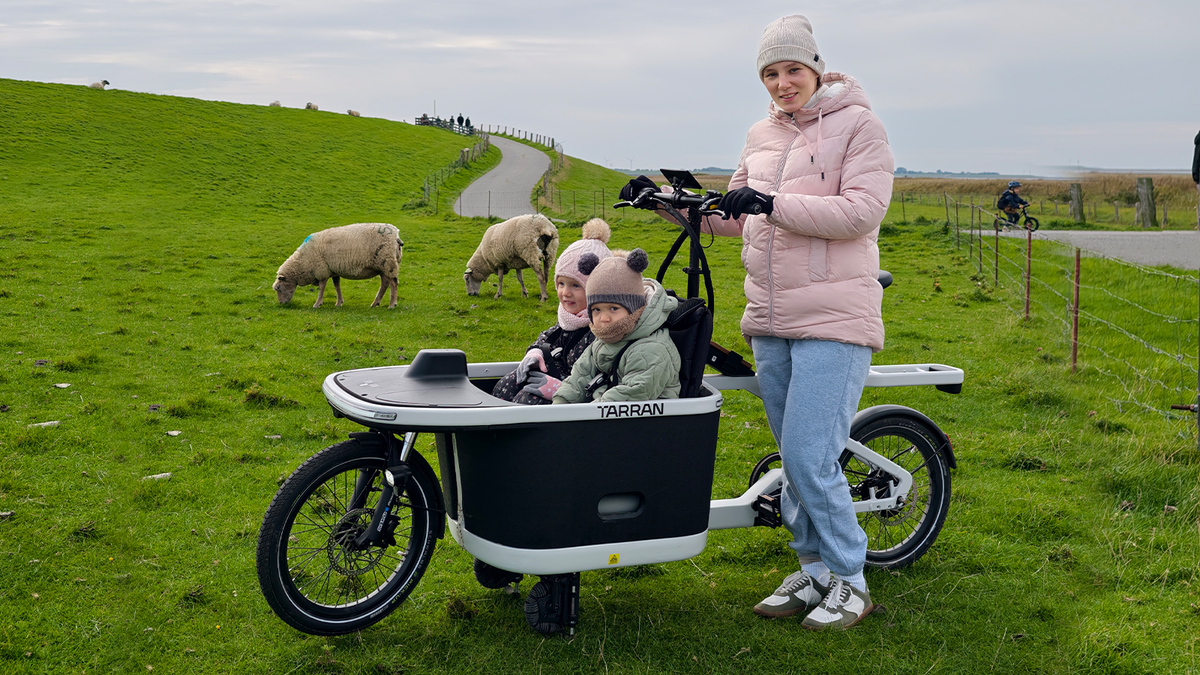
The fear that a bicycle cannot handle the physical demands of a modern lifestyle is a common misconception. Current engineering standards for the electric cargo bike have pushed payload limits to levels that rival the trunk space of a compact car. Most high-utility models support a total weight capacity between 150 kg and 300 kg, which includes the rider and the cargo. The specialized design of these frames allows for the safe transport of children, heavy grocery hauls, and professional equipment without compromising stability.

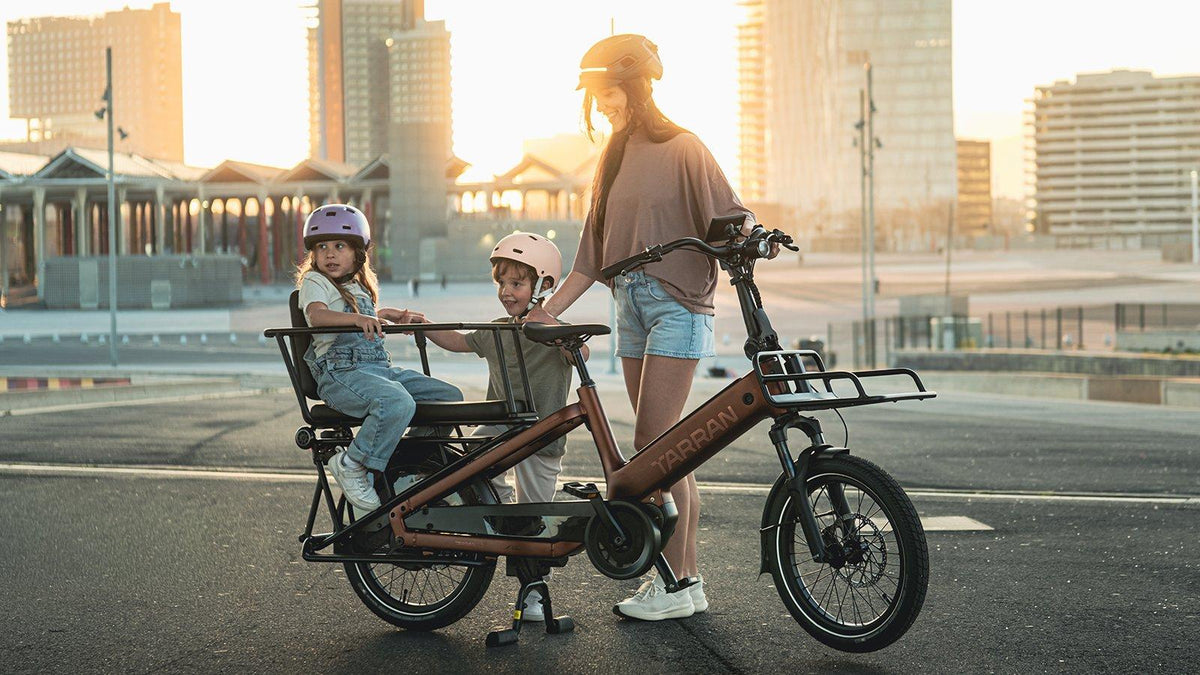
Different frame architectures provide varied utility profiles. The front-loading "bakfiets" or "Long John" style positions a large box between the handlebars and the front wheel. That layout provides a low center of gravity and allows for the transport of 100 kg to 200 kg in the cargo area. Such a configuration is ideal for parents who wish to keep their children within sight during the commute. Longtail models, on the other hand, utilize an extended rear rack that can accommodate multiple child seats, large pannier bags, or even an adult passenger in some heavy-duty versions.
Typical Volume and Load Capabilities
| User Profile | Common Cargo Items | Estimated Weight (kg) |
| The School Run Parent | 2 Children + 2 Backpacks | 50 - 90 |
| The Weekly Shopper | 6-8 Grocery Bags + Beverages | 30 - 70 |
| The Urban Professional | Tools, Ladder, Parts | 40 - 120 |
| The Pet Owner | Large Dog + Safety Crate | 30 - 60 |
| The Delivery Courier | 3-5 Large Parcels | 50 - 150 |
Innovation in that sector is best shown through the TARRAN T1 Pro. The T1 Pro is a high-performance cargo e-bike featuring a 100 Nm torque mid-drive motor and a 2264 mm total length. It supports a maximum load of 220 kg and utilizes a Dynamic Dualdrive™ Landing Gear system to prevent tipping when stationary. With a dual-battery setup providing up to 200 km of range and an intelligent cockpit featuring 1080P cameras and rear radar for collision alerts, the T1 Pro provides the technical sophistication of a car in a much more efficient frame.

The utility of a transport bicycle extends into the commercial realm. Studies across European logistics hubs demonstrate that cargo e-bikes can replace up to 51 percent of all urban freight journeys. In a city center, a bicycle can stop within meters of a delivery point, whereas a van might spend 25 minutes searching for a legal parking spot. That accessibility allows bike couriers to complete 10.1 deliveries per hour, compared to just 4.9 for traditional vans in the same urban core.
Stability remains a priority for manufacturers. Modern transport bicycle models often include hydraulic disc brakes and specialized tires to handle the momentum of a fully loaded frame. The integration of electric assist allows riders to conquer steep hills even with a 100 kg load, rendering the physical effort negligible compared to a traditional bike. Through the use of rain covers, sun canopies, and insulated boxes, these vehicles offer all-weather utility that satisfies the requirements of year-round transport.
Beating Traffic: The Speed Advantage of the Electric Cargo Bike.
In the dense urban fabric of London, Paris, or Berlin, the maximum speed of a vehicle is rarely the determining factor for arrival time. Instead, "time certainty"—the ability to predict exactly how long a journey will take—becomes the ultimate luxury. While a car can theoretically reach 100 km/h, the reality of urban rush hour reduces average car speeds to a mere 11 km/h to 15 km/h. An electric cargo bike, restricted to a 25 km/h assist limit, consistently maintains average travel speeds of 16 km/h to 20 km/h through avoiding congestion.
Research from Brussels shows that cargo bikes are twice as fast as vans for urban deliveries. That advantage arises from the ability to utilize bicycle-specific infrastructure and take shorter routes through pedestrian-friendly zones or parks that are closed to motor traffic. On average, a cargo bike covers a 30 percent shorter distance than a car to reach the same urban destination. When travel distance decreases and average speed increases, the bicycle becomes the clear winner for any trip under 10 kilometers.
Travel Efficiency Comparison (8-10 km Urban Route)
| Variable | Private Car | Cargo E-Bike |
| Average Speed (Peak Hour) | 11 km/h | 16 - 25 km/h |
| Route Distance Modifier | 100% (Standard Roads) | 70% (Shortcuts Allowed) |
| Parking Search Time | 10 - 25 Minutes | 0 - 2 Minutes |
| Total Journey Time | 45 - 75 Minutes | 25 - 35 Minutes |
| Predictability Score | Low | High |
The "parking crisis" in cities like Amsterdam and Paris has further tilted the scales. Amsterdam is currently removing 10,000 parking spaces from its city center to create more space for greenery and pedestrians. As parking permits become harder to obtain and hourly fees soar, the time wasted in a car continues to grow. A cargo bike electric user simply rides to the front door of their destination, secures the bike, and walks inside. That door-to-door efficiency is something no car can match in a modern city center.
The psychological impact of that efficiency is profound. Drivers often report high stress levels during the idle-queue-park cycle of city errands. In contrast, e-bike riders benefit from a more controllable commute. Without the threat of an unexpected traffic jam or a road closure completely stalling progress, the rider experiences a sense of freedom and reliability. For an 8 km commute in Berlin, a car journey might fluctuate between 25 and 50 minutes depending on luck, while an e-bike journey stays a predictable 30 to 35 minutes every single day.
The infrastructure of European cities is evolving to support that speed advantage. The Berlin Mobility Act and similar initiatives in Copenhagen focus on creating wider, protected cycle lanes that accommodate the larger footprint of a transport bicycle. These cycle highways allow for consistent speeds over long distances, effectively turning the e-bike into a rapid transit system for individuals and families. Through the expansion of the strategic cycle network, cities are creating a world where the car is no longer the fastest way to cross town.
Environmental Impact and Sustainable Commuting on an E-Bike.
The environmental benefits of the transport bicycle represent a paradigm shift in urban sustainability. While electric cars are often promoted as a green solution, their lifecycle carbon footprint remains substantial due to the massive resources required for battery production and vehicle manufacturing. A gasoline-powered car produces roughly 57.5 tonnes of CO₂ over its lifecycle, while an electric car still generates about 50.5 tonnes. In stark contrast, an electric cargo bike generates only 3 tonnes of CO₂ over the same 200,000 km lifespan.
Such a massive reduction in carbon intensity stems from the radical difference in vehicle mass. A typical car weighs around 2,000 kg, while a cargo e-bike weighs roughly 150 kg—a 14-fold difference. Moving less mass requires less energy. An electric car consumes 15 kWh to 20 kWh of energy per 100 kilometers, whereas a cargo e-bike requires only 1 kWh to 1.5 kWh for the same distance. Even if the electricity for the bike comes from a non-renewable grid, the overall footprint remains 94 percent lower than that of any automobile.
Lifecycle Carbon Footprint Analysis
| Vehicle Type | Production CO2 (kg) | Operational CO2 (g/km) | Lifecycle Total (Tonnes) |
| Petrol Sedan | 9,200 | 170 - 271 | 57.5 |
| Electric SUV | 14,700 | 60 - 75 | 50.5 |
| Cargo E-Bike | 134 - 200 | 9-14 | 3.0 |
The environmental advantages extend beyond greenhouse gases. Cars are a primary source of urban noise pollution, which is linked to cardiovascular disease and sleep disorders. E-bikes operate almost silently, creating a more peaceful urban environment. Furthermore, the reduction in tire wear and brake dust—major sources of microplastic and particulate matter pollution—helps improve the air quality of dense neighborhoods.
Health externalities also play a critical role in the sustainability of the cargo bike electric lifestyle. Regular cycling provides low-impact cardiovascular exercise that integrates seamlessly into a daily routine. A study from the European Cyclists' Federation found that e-bike commuters save an average of $1,700 annually in healthcare costs compared to car drivers. That active transport keeps citizens fit and reduces the long-term burden on public health systems. Through the use of a transport bicycle, a commuter does not just save the planet; they actively improve their own longevity.
Support for that transition is growing at the policy level. The European Declaration on Cycling formally recognizes cycling as a strategic tool for climate action. Governments across Europe now provide financial incentives to help citizens make the switch. In the Netherlands, the MIA and Vamil schemes offer tax deductions of up to 45 percent for businesses investing in electric cargo bike solutions. In France, commuters can claim up to 0.25 euros per kilometer for cycling to work, effectively being paid to avoid driving. These policies reflect a realization that the most sustainable car is the one that is replaced with a bicycle.
Transitioning to a Cargo Bike Electric Lifestyle.
Choosing a transport bicycle over a car is a data-driven decision for modern Europeans. The evidence shows that for urban trips under 15 kilometers, the cargo e-bike offers superior speed, lower costs, and a negligible environmental footprint. By embracing a cargo bike electric lifestyle, families reclaim their time and financial freedom while contributing to a cleaner, quieter city. The car is no longer the only way to move; it is simply the most expensive one. Summary: The transport bicycle is the future of urban mobility. Through the combination of high capacity, traffic-beating speed, and massive cost savings, the electric cargo bike stands ready to replace the family car for most daily needs. The transition fosters healthier lifestyles and more sustainable cities across Europe. Embracing the cargo bike electric revolution is a logical step toward a more efficient and enjoyable urban existence.

Leave a comment
This site is protected by hCaptcha and the hCaptcha Privacy Policy and Terms of Service apply.