

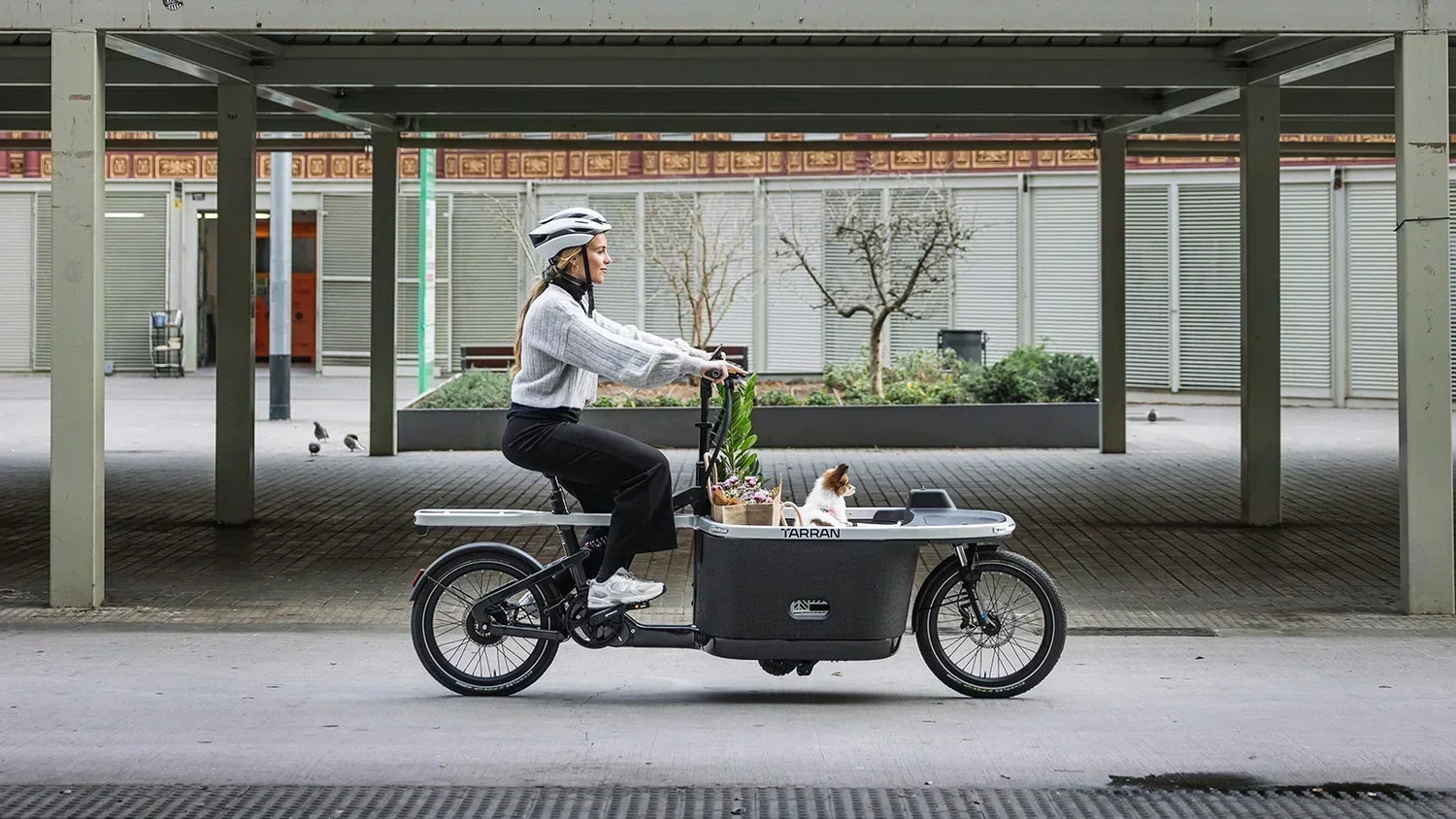
A Long John is a two-wheeled cargo bike with a low loading platform positioned between the handlebars and the smaller front wheel. This classic frame design supports the stable transport of heavy loads or children while remaining agile in urban traffic. Because the center of gravity sits extremely low, the bike remains stable and easy to steer even when fully loaded.
What Defines the Classic Design of a Long John Cargo Bike?
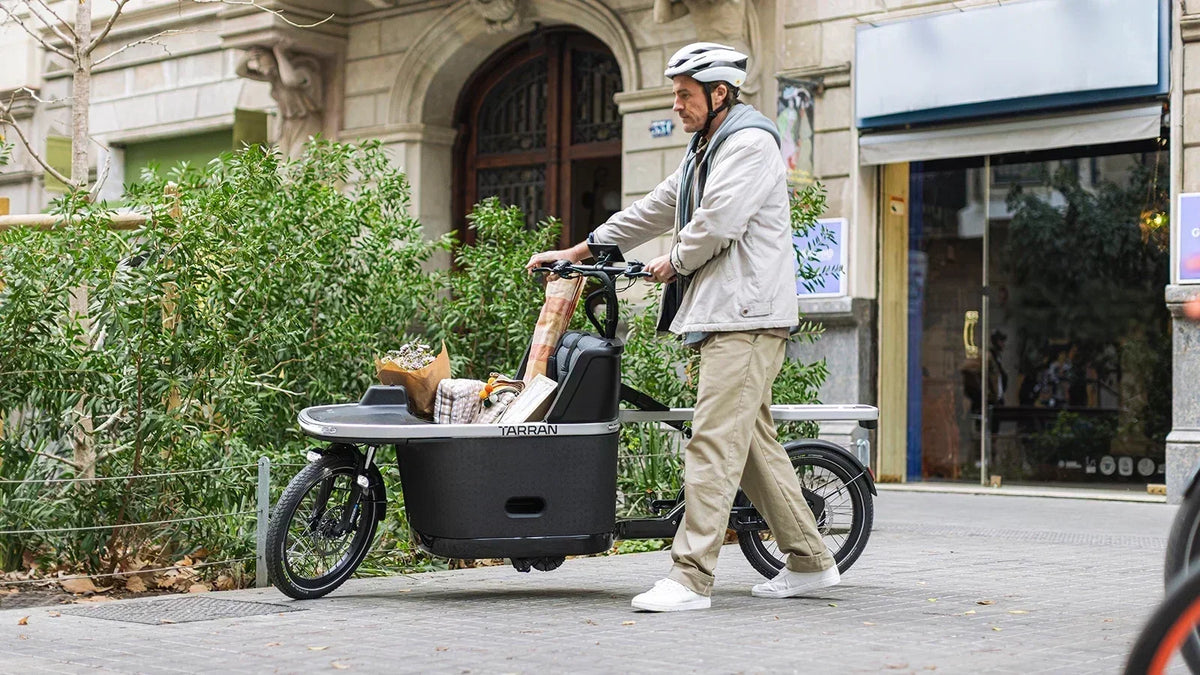
The classic Long John cargo bike uses an extended frame with the cargo box positioned directly in front of the rider and behind the front wheel. This layout clearly distinguishes the two-wheeled Long John from three-wheeled cargo bikes and models with rear loading platforms. It keeps the cargo within the rider’s field of view while preserving a riding feel similar to that of a conventional bicycle.
Its Historical Origins in Denmark
The first Long John cargo bike emerged in Denmark at the beginning of the 20th century. Tradespeople and couriers needed a fast way to transport heavy parcels over cobblestone streets. The idea of using a smaller front wheel and extending the frame permanently changed urban goods transport.
In the early decades of the 20th century, the design already demonstrated clear advantages over traditional baker’s bikes with high front baskets. Moving the load closer to the ground sharply reduced instability during evasive maneuvers. Danish courier services used these bikes as durable workhorses for decades before widespread motorization temporarily pushed them aside.
Geometry and Weight Distribution
The combination of a small front wheel and a larger rear wheel significantly lowers the bike’s center of mass. This creates balanced weight distribution and makes starting and stopping at intersections much easier. The frame must also provide high torsional stiffness to absorb impacts on uneven surfaces.
A typical configuration uses a 20-inch wheel at the front and a 26-inch or 28-inch wheel at the rear. The small front wheel creates the vertical clearance needed to position the cargo box just above the ground. High-quality chromoly steel tubing or modern hardened aluminum alloys help prevent the frame from swaying or flexing excessively under heavy loads.
How Does Cable Steering Work on Modern Front-Loader Models?
Cable steering on modern front-loader models transfers handlebar movement directly to the front fork through fine steel cables. The system replaces the traditional rigid steering rod with flexible cables and enables a much wider steering angle. As a result, even long cargo bikes can be maneuvered precisely in confined spaces without excessive effort.
|
Steering system |
Turning circle |
Maintenance requirements |
Steering feel |
|
Cable steering |
Very small |
Moderate |
Very direct and smooth |
|
Rod steering |
Medium to large |
Low |
Mechanical, with slight play |
Advantages Over Traditional Rod Steering
A rigid steering rod quickly reaches its mechanical limits in sharp turns. Cable steering prevents the components from binding. Riders benefit from a tight turning circle, which makes parking in busy city centers noticeably easier.
A steering rod beneath the loading platform takes up space and often limits the maximum steering angle to less than 40 degrees. A dual-cable setup can allow steering angles of up to 90 degrees. This provides exceptional maneuverability in confined areas, an especially valuable advantage in narrow bike garages or crowded pedestrian zones.
Maintenance and Precision in Daily Use
Modern systems use rust-resistant stainless steel cables routed through protective housings. Regular checks of cable tension help maintain precise, play-free steering for years. The system responds sensitively to even small handlebar movements.
High-quality systems use redundant dual cables. If one cable were theoretically to fail, the second could continue to transmit steering input. Teflon-coated inner housings minimize friction, allowing the steering to feel almost as smooth as that of a conventional city bike.
Why Does a Low Loading Platform Provide Better Ride Dynamics?
A low loading platform positions the cargo weight as close to the road as possible, reducing the tipping moment in corners. The bike’s handling therefore remains similar to that of a conventional bicycle because lateral forces have less leverage over the handlebars. This improves control at higher speeds and during sudden evasive maneuvers.
The Physical Advantages of a Low Cargo Area
When heavy groceries or two children sit low within the frame, the steering remains responsive. Placing substantial weight high above the front wheel would make the bike feel sluggish. The low position can also offer the cargo better protection from wind and weather.
The relevant physical concept is the moment of inertia around the longitudinal axis. The lower the mass is positioned, the less torque the rider must counteract with their arms. Even during dynamic cornering with a payload of 60 to 80 kilograms, the vehicle can remain on the intended line without the front wheel breaking away.
Safety When Transporting Children and Cargo
Children sit directly within the rider’s field of view on a Long John. The low step-in height makes it easier for young passengers to climb into the box independently. If the bike falls, the lower seating position also reduces the drop compared with a rear-mounted child seat.
The side walls of the cargo box act as a protective barrier. Combined with five-point harnesses and padded headrests, they help keep young children securely seated. Riders can also maintain visual contact and speak with their children while riding, which can make the journey more comfortable for everyone.

How Has Electrification Transformed Historic Cargo Bikes?
Electrification has transformed historic cargo bikes from purely human-powered utility vehicles into practical urban alternatives to cars. Powerful mid-drive motors and high-capacity batteries help offset the frame’s weight and make steep climbs easier. This has expanded their use from short delivery routes to longer commuting journeys.
From Heavy-Duty Utility Bike to Smart Family Vehicle
In the past, carrying heavy loads required strong legs and considerable stamina. Today, modern torque sensors deliver assistance smoothly as the rider pedals. Electronic shifting systems and hydraulic disc brakes have also become common features on modern electric cargo bikes.
Electric motors with 85 Nm of torque or more can make starting on hills much less demanding. Modern shifting systems can automatically adjust the gear ratio to match the rider’s cadence. Together with four-piston disc brakes, these features can help bring a fully loaded electric cargo bike to a controlled stop even in wet conditions or on steep descents.
Digital Innovations for Easier Riding
Modern electric cargo bikes use sensors to support riding stability. Automatic adjustments to motor assistance and intelligent stability systems can help reduce front-wheel instability on wet surfaces. These technologies can make the bike feel safer and more intuitive for less experienced riders.
Telematics units, integrated GPS tracking, and digital onboard computers turn the cargo bike into a connected vehicle. Information such as remaining battery range, system status, and theft alerts can be viewed on a smartphone in real time.
Ergonomics, Loading, and Everyday Riding Comfort
A cargo bike performs at its best when its ergonomics and loading options suit the rider’s body and daily needs. Because several people of different heights often share a family cargo bike, components that can be adjusted quickly play an important role.
Adjustability for Different Riders
Quick-release seat posts or dropper posts, together with angle- and height-adjustable stems, allow the riding position to be changed within seconds. An upright position provides excellent visibility in urban traffic, while a slightly sportier posture can improve power transfer on longer journeys outside the city.
Cargo Box Modularity
The requirements placed on the loading area can change from day to day. Flexible box systems may include removable benches, foldable rain covers, and dedicated adapters for infant car seats. Riders who carry work materials or weekly groceries on weekdays and take their children on weekend outings benefit from tool-free, quick-change attachment systems.
The Modern Premium Experience With Tarranbike
A notable example of this evolution is the Tarran Compact Cargo E-Bike. This model combines the traditional benefits of a compact cargo-bike design with advanced chassis technology and an intelligent landing gear system for greater stability when stopping.
Tarranbike addresses common challenges associated with carrying heavy loads through an automatic stabilization system. When the bike stops, small support wheels deploy so the rider does not need to place their feet on the ground. This innovation makes loading and unloading children or commercial cargo more stable. Readers who want to learn more can explore the Tarranbike Technology Page for a closer look at the future of urban mobility.
For further information on road safety, legal classifications, and technical testing standards, established specialist organizations provide useful resources. The German Bicycle Club (ADFC) offers extensive information on cargo-bike infrastructure and road safety. Readers interested in rigorous testing procedures and safety requirements for frames and brakes can find detailed reports from TÜV Rheinland. The Federal Ministry for Digital and Transport also documents current funding programs and the legal framework for urban micromobility.
How to Choose the Right Model
The right electric cargo bike depends on your daily routes, available storage space, and primary use. Setting clear priorities makes it easier to compare models.
Priority List for Buying a Cargo Bike
- Safety and stability: A low center of gravity and intelligent assistance systems should come first.
- Payload and cargo volume: Is there enough room for two children or a week’s groceries?
- Steering system: Cable steering offers an especially tight turning circle for urban use.
- Motor performance and battery: Choose enough torque for the gradients on your regular routes.
- Compact dimensions: The bike must fit in your bike room or designated parking space.
Would you like to experience the future of cargo bikes for yourself? Learn more about Tarranbike today and make your everyday journeys more sustainable, stable, and comfortable.
Long John Cargo Bike FAQs
Is a Long John Cargo Bike Difficult to Ride?
No, most riders need only a short adjustment period. The low center of gravity creates a familiar bicycle-like feel, although the distance to the front wheel takes practice during early maneuvers. After a few turns, the handling usually feels natural.
Does a Long John Fit in a Standard Bike Rack?
Usually not, because of its extended frame. Long Johns often need dedicated parking, a wide bike garage, or an open space on private property. Many cities are gradually adding wider cargo-bike parking spaces.
Can a Long John Carry Two Children?
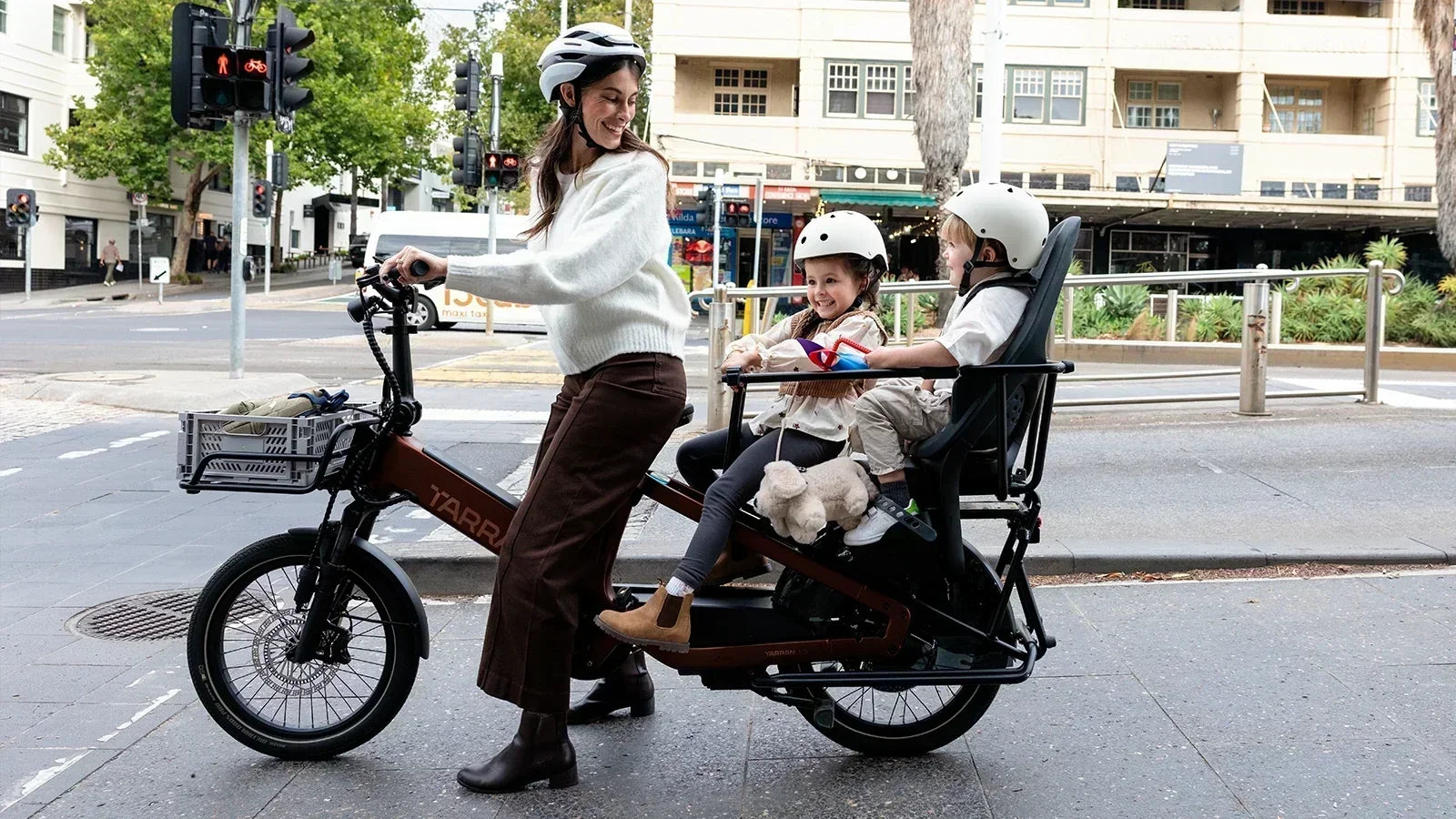
Yes, many models are designed for this purpose. Benches with harness systems can seat two young children side by side or one behind the other, while ergonomic seat shells improve comfort on longer rides.
Is Cable Steering Less Reliable Than Rod Steering?
No, modern cable systems can be reliable and low-maintenance. Protected stainless steel cables help keep dirt out and maintain precise steering, while redundant dual-cable routing can add operational security.
Do You Need a License for an Electric Cargo Bike?
No, as long as motor assistance ends at 25 km/h. Pedelec cargo bikes are legally treated as bicycles, so no driving license is required. Helmets are still strongly recommended for all occupants.

Leave a comment
This site is protected by hCaptcha and the hCaptcha Privacy Policy and Terms of Service apply.